Saturday, January 30, 2016

More "Writing Tools" Notes - Patterns

If I was really cool and planned ahead more, I would have posted this closer to Martin Luther King Day. Oh well.

In Writing Tools, Roy Peter Clark advises writers to build, then break, patterns. He says it adds emphasis to the final element, while linking the whole together. Dr. King gives us a prime example:
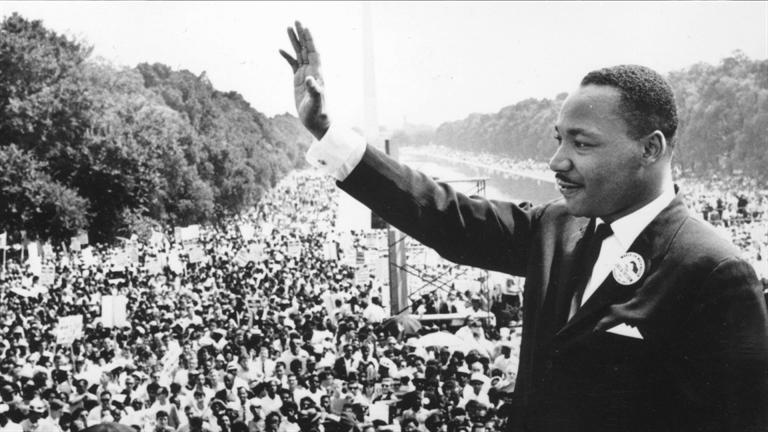
From the prodigious hilltops of New Hampshire, let freedom ring. From the mighty mountains of New York, let freedom ring. From the mighty Alleghenies of Pennsylvania! Let freedom ring from the snow capped Rockies of Colorado! Let freedom ring from the curvaceous slopes of California! But not only there; let freedom ring from the Stone Mountain of Georgia! Let freedom ring from Lookout Mountain in Tennessee! Let freedom ring from every hill and molehill in Mississippi. From every mountainside, let freedom ring.
He has a sort of stumbling waltz going on: "Let freedom ring" ends the first two sentences, so you're expecting the third, the trifecta, but no--he gives us half a sentence instead and lets us fill in the blank. Then "let freedom ring" is placed at the start of the sentences, and again, not a third. Another broken trifecta, and in this one he places a clause first, then puts "let freedom ring" in the middle of a sentence. Next two sentences, freedom rings at the start. Then he reprises the first sentence structure to end it with "let freedom ring" at the end of the sentence.

Geez, Dr. King. Way to throw patterns for a loop.

We expect a third to complement two matching elements, because that is the custom. If the third is switched, then, it grabs our attention. For Dr. King, this means he kept his audience's attention throughout the whole. How boring would it have been to have the same sentence structure over and over, yet how less full and triumphant if he had only listed three places total.

Clark says that when it comes to lists:
Use one for power; two for comparison and contrast; three for completeness, wholeness, roundness; and four or more for a list, inventory, compilation and expansion.
One last thing I'll add: The repetition of "let freedom ring" is what keeps the whole thing from shattering to pieces. There is still one common element, even though he is continually switching it up and laying faux patterns left and right.

Clark said repetition of words is good for one other thing besides pounding the word into the audience's brain:
(Hemingway) often repeats key words on a page—table, rock, fish, river, sea—because to find a synonym strains the writer's eyes and the reader's ears.
This is not permission to use the same word in every sentence, but it is permission to not think too hard for a synonym when a simple word will continue to do the work. Here's the thing with simple words: they are less memorable. When you are writing, you want your reader to forget they are reading; if you start doing a thesaurus song and dance, you'll pull them out.

For example: I have used the word "three" or versions of it, seven times in this post. I've said "sentence" ten times, seven times in the paragraph underneath all that ringing freedom alone. I bet you didn't even notice.

Saturday, January 23, 2016

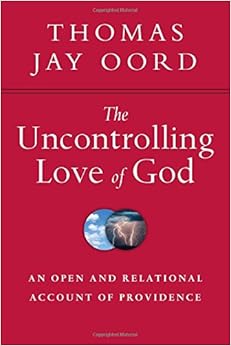
What's Elizabeth Reading? ...Thomas Jay Oord

I'm going to interrupt this Writing Tools flow with a writer's book review, partially to shake things up and partially because my article about it was printed last week in the Idaho Press-Tribune.

Thomas Jay Oord is a theology professor at Northwest Nazarene University. Wikipedia calls him the leading theologian on love working today, and his recent book, "The Uncontrolling Love of God," undoubtedly adds to that empire (if we give Wiki the benefit of the doubt). In this book, Oord says God's preeminent attribute is love. God wants the best for everyone, which leads to the problem of evil: Why is there evil in this world if God exists?

This question is what brings many to atheism, and it deserves all the books and thought it gets. Oord's solution, in short, is that there is evil because God simply cannot prevent it. He argues that were an all-loving God able to prevent evil from happening, He would. For more on this and Oord himself, read the article I wrote about him.

Now for how he wrote it: Philosophy and theology is infamous for being difficult to get through. A lot of that is because the writers are stereotypically long-winded, exhaustive in their arguments, prone to jargon, and boring.

Of those traits, I'd only assign one to Oord, that of being exhaustive. In the philosophy world, though, that is the correct way of doing things. People poke holes in your argument if you don't cover every single base in existence. Oord was close to doing this in his book, but he missed a couple by my reckoning. He didn't mention the devil, who I think should have at least been mentioned in a "He is irrelevant" fashion, and he never backed up the main assertion he was standing on, that is, that God's primary attribute is love. He used this as a building block and as a way to discount other theories, yet never gave any reasoning to support the claim.

While his argument may seem strong, it is a stone castle set on a cloud.

This is my main problem with the book. The writing itself is academic, easy to understand, and concise. He pulls the reader along through the first few chapters, which I especially enjoyed, with teasers of what is to come if they only hang on. He introduces examples at the beginning that he then refers back to throughout the entire book, which gave his concept a workable setting.

Please note that these are positive attributes in any sort of writing (maybe not always the academic part, but the rest of it): Write clearly and concisely. Use teasers or other methods to keep your reader going. Set your scene up early.

But don't ignore your foundation, especially when it comes to philosophy or theology. "Because it's what I believe with all my soul" doesn't cut it.

Saturday, January 16, 2016

"Writing Tools" Notes - Verbs


What I wrote down: Active verbs move the action and reveal the actors. Passive verbs emphasize the receiver, the victim. The verb "to be" links word and ideas.

As a reminder, active verbs are when the subject is doing the verb. Examples: John threw the ball. The ball hit Alice. Alice knows where John lives.

Passive verbs, on the other hand, give the object of the sentence precedence: The snowball was placed in John's pillowcase by Alice. The pillow was soaked by the snowball.

As for the last part of my note, Clark explained, "A verb that is neither active nor passive is a linking verb, a form of the verb to be." (His italics, not mine.) He says that all verbs are either active, passive, or "to be."

Generally, people discourage passive voice for its wordiness and mellow tone. Writing Tools author Roy Peter Clark doesn't discourage passive voice, though; he says to use it for a purpose. What do you want to emphasize? Usually, it will be the subject, but if it is the receiver, then go for it. Use passive voice.

Read this example Clark used and see if you can pick out the passive and active:
Presently I saw a man leaning on a two-strand barbed-wire fence, the wires fixed not to posts but to crooked tree limbs stuck in the ground. The man wore a dark hat, and jeans and long jacket washed palest blue with lighter places at knees and elbows. His pale eyes were frosted with sun glare and his lips scaly as snakeskin. A .22 rifle leaned against the fence beside him and on the ground lay a little heap of fur and feathers - rabbits and small birds. I pulled up to speak to him, saw his eyes wash over Rocinante, sweep up the details, and then retire into their sockets. And I found I had nothing to say to him ... so we simply brooded at each other (John Steinbeck, Travels with Charley)
There was only one passive sentence, but it was there: "His pale eyes were frosted with sun glare ..." Imagine if Steinbeck had used the active. That sentence would have said, "Sun glare frosted his pale eyes ..." Do you hear the difference? The first sounds lazy to me.

But that's the point, isn't it? He comes across as a lazy, laid-back character, and all that Steinbeck did to make it that way was to make him lean back, not move much, and suffer through a single passive sentence. Without that one passive sentence, he seems much more hostile, mainly because then the emphasis would be on "glare," not "pale eyes" and "frosted."

Another note from the book, while we're on the subject of verbs: A good adverb (those exist?!) changes the meaning of a verb. It does not increase the intensity of what is there. Use the correct verb if possible, but use an adverb if necessary to convey the correct meaning. Examples of adverbs Clark would excuse: smiled sadly, killing me softly, sweetly faked.

Using adverbs is lazy if they are doing unnecessary work (backward, isn't it?). Remember that great quote by Robin Williams' character in The Dead Poets' Society?
So avoid using the word ‘very,’ because it’s lazy. A man is not very tired, he is exhausted. Don’t use very sad, use morose. Language was invented for one reason, boys - to woo women - and, in that endeavor, laziness will not do. It also won’t do in your essays.
Yes, "very" is an adverb.

Saturday, January 9, 2016

The Haiku Turn

I am finally getting around to discussing my notes from Roy Peter Clark's Writing Tools. It's sure taken me long enough, hasn't it?

The book is an odd mix of advice for news reporting and storytelling, with most advice applying in both fields but some only mattering in one or the other.

There were also some great jokes and anecdotes. My new favorite English joke: "I dropped the toothpaste," he said, crestfallen.

An anecdote I loved told about a fellow reading through old stories from children, then thinking to himself that one of the kids sounded like E.B. White. He looks, and it totally was. True voice, that; no pretending or following trends.

One piece of advice that stood out to me in particular was to create paragraph turns, similar to those in a haiku.

Haikus are some of the funniest poems out there. In ancient times, poets would get together, get drunk and make a game out of writing haikus. Here are some I love. The first three are by Yosa Buson, who was brilliant with imagery, and the second three are by Matsuo Basho, whose bluntness and imagination I adore. The final three (I was restraining myself, okay?) are by Kobayashi Issa, who wrote well about how he viewed the world, placing himself into all the poems, it feels like:
Morning breeze
riffling
the caterpillar's hair.
The old man
cutting barley -
bent like a sickle
A tethered horse,
snow
in both stirrups.
Still alive
and frozen in one lump -
the sea slugs.
What fish feel,
birds feel, I don't know -
the year ending.
Don't imitate me;
it's as boring
as the two halves of a melon.
I'm going to roll over,
so please move,
cricket.
Washing the saucepans -
the moon glows on her hands
in the shallow river.
In this world
we walk on the roof of hell,
gazing at flowers.
Now that you have enjoyed some haikus, my point: Haikus have surprise endings. Whether the surprise starts on the second line or the first, it is not what was expected, yet it somehow fits. Paragraphs can and should be written similarly, when possible, particularly in academic or media writing.

The first sentence of a paragraph is supposed to introduce the concept of the paragraph. Then you have support and a conclusion. Make sure your conclusion is not the same as your first sentence. You ought to have given new material that affects what you are saying and advances it. The more interesting, the more your reader will like it. Surprise them.

I don't know how this would hold in fiction or storytelling, except on the chapter level. Insert a plot twist in every chapter. Characters should not do the expected, and they should never face the expected (unless it is the dreaded, of course). This keeps the story interesting.

Let's call this tool the haiku turn: the moment when you turn from the expected.

Wednesday, December 30, 2015

How to Write a Letter

The day I tried to Google "average length of a letter" and found only results related to cover letters and font sizes, I realized people don't write letters anymore. I knew it was rare, but this was something else.

So let me tell you about letter writing and maybe you'll give it a try. Everyone loves receiving letters in the mail.

Some logistics:

  • Putting an address on the letter itself is optional.
  • Putting the date on the letter itself is also optional.
  • Salutations (e.g. Dear ___,) can be anything you want, or even skipped altogether.
  • Sign it at the bottom ... but make sure it's legible, or else the envelope makes it clear the letter came from you. Signing it tells the person who you are and that you are finished.
  • P.S., or post script, was created back in the days before erasers or the delete key. They were used if you had forgotten something but had already added your signature at the bottom. Not really needed anymore unless you are joking around or it's some stylistic choice.
  • As far as I can tell, there is no average letter length. Write until you finish up. When my husband was serving a mission for The Church of Jesus Christ of Latter-day Saints, I tended to write him ten-page letters. I've also written my share of one-page letters.
  • Use paragraphs. It makes reading easier.
  • Doodling in the margins is fine, depending on who the recipient is.
  • Letters can be sent through the mail, email, Facebook, or any other way you feel like.

With those things out of the way, how do you decide what to put in your letter? Some ideas:

  • Is there a purpose to the letter? Make sure to include it. Sometimes it's easy to forget.
  • What have you been filling your life with lately? Hobbies, work, family, vacations, etc.
  • Tell some stories about what you've been experiencing. Include a funny one if possible.
  • Think aloud: Write about what's been on your mind, ideas-wise or worries-wise.
  • Ask questions. No letter is complete without them, and it makes a reply easier. Reply to any questions they asked you, if their letter came before yours.
  • What would your recipient in particular like to hear about? Satiate their curiosity.
  • Anything else you feel like talking about.
Writing letters really isn't much trouble, it just takes a bit of time and thought. Here is an example of a letter (abridged) I wrote to a missionary friend of mine while I was in college a few years ago:

December 11, 2012
My Dearest Sister Rachel,

I figured that if I write this now, it might just reach you before Christmas. So merry Christmas, Rachel! I hope you are keeping warm and doing well. When you get a chance, you should let me know how Russia, the mission, your companion, and everything else is going.

I looked, and last time I wrote you was about a month ago. Thankfully (or not?) nothing incredibly important has occurred since then. Nothing to beat Shelby coming home, anyway. My last update from her (a week ago?) was that she is doing well. She is happy to be with family, that’s for sure. Other news…my roommate, Sarah, has had a series of surgeries and still isn’t done with doctors, but she dropped out this semester, so she doesn’t have to worry about schoolwork. She is in good spirits, and it amazes me. I think I would be a nervous wreck if my body was as messed up as hers is. ...

It’s Finals Week right now. I only have one real final; the others are just the last test of the class and the last is reciting a poem in French. That last one is what I get to do tomorrow morning. In my poetry (English; I took two poetry classes this semester) class, we had our biggest project around Thanksgiving. We put together portfolios of our best poetry and wrote an essay about three of our own poems and three of someone else’s. ...

Everyone keeps asking me if I have any big papers to write, but this semester has actually been pretty tame when it comes to papers. The most intense paper I had to write was actually for Honors credit in my Human Development course. My sister ... gave me access to some of her teenage journal entries and I compared them with a sample of my own, to see how we compared while in that phase of development. To be more precise, I was paying attention to how we started to develop a vocational identity – how we made money, how/if we balanced employment with school, and how we worked toward a future career. There is some debate amongst developmentalists right now about whether or not teenagers should be employed while attending high school. Some say it is good for them, because it expands their social circle and gives them professional/workforce experience. Others say employment inhibits their ability to perform to their full potential in school. ... When I finished, the paper was 20 pages long, including the title page, abstract, and reference page. I wrote an abstract simply because the paper was getting to be so long. Honestly, I enjoyed writing it. I think I even forgot about the time and stayed up until 2 a.m. working on it. I think that’s a sign that I have chosen to do the right thing with my life. If you forget time because you are doing what you love, then you are in the right spot. It wasn’t that I was enjoying the subject; I was just enjoying writing. ...

I’m going to go to bed now, and will write more tomorrow, I hope. Love you!

Love, Elizabeth

Saturday, December 19, 2015

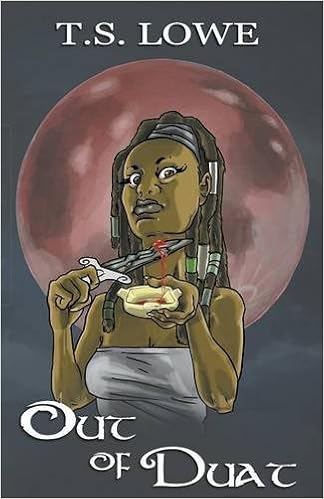
What's Elizabeth Reading? ...T.S. Lowe

I had the privilege a year ago to be the principal editor of T.S. Lowe's now-published book Out of Duat, a historical fantasy for a middle school-aged audience. The book involves a young Egyptian pharaoh, a dangerous cult, the cult's slightly insane priestess and an accidental time traveler from South Dakota, with some zombies and Egyptian gods thrown in for good measure.

It is a book of parallels, and that, I think, is one of its greatest strengths. Another is how clear it is just what each character wants (the conflict). Here's the lowdown:

Hath - As a young girl, she watches her father killed by the Egyptians, then learns how to be a priestess to the god of death from her mother. She and her people want revenge, but there's just one problem: She's fallen in love with the Pharaoh, the son of the man who killed her dad.

Xius - A young pharaoh with an awful temper who wants to prove himself. He wants to marry for love but is being pressured by the court to marry sooner than he is ready. He hasn't even found someone to love yet. On top of that, he doesn't know what to do about the absolutely annoying, supposed time traveler.

Annette - A teenager from a broken family and South Dakota who can only talk to Xius, because he has a magic amulet that allows him to understand her language. She was enslaved upon her arrival and is not doing the better for it, even though everyone keeps telling her how grateful she ought to be that Xius didn't have her killed outright.

Set - Xius's chief adviser, Set is a recent widower. His wife was killed by the cultists and he misses her terribly--so much so, in fact, that he is willing to make any deal just for the chance to bring her back.

There are other characters too, of course, but these are our plot-drivers. The parallels are created by them, too. Hath and Annette play off each other, as do Xius and Set. We also have an Egyptian wife who was killed by cultists, and a cultist father who was killed by Egyptians. There are others, but I invite you to look for them as you read.

Lowe knows how to craft a story, and for her it is all about conflict, which is rooted in character. Did you notice how every single character I mentioned desired something? Hath wants revenge and love. Xius wants to prove himself. Annette wants to survive. Set wants his wife back.

These desires change as the characters progress, which is both character development and how the plot moves along. Situations change people, and people can change situations.

Even after reading it so many times over that I'm sick of it, I still recommend this book. It is fun, intelligent and easy to read.

Wednesday, December 9, 2015

Shooting Stars

A young man once was on a journey through the forested mountains where the elks and salmon live, and because he was hungry, he climbed the tallest tree he could find. It was a pine tree, and its sap and bits of bark and needles stuck to his hands as he climbed, the scent filling the air around him.

It was a slow climb to the top, and once he was there he paused to look at the land around him, at the sweeping river and the spotted canopy of trees. He saw a hawk's shadow gliding across a meadow and raised his gaze to the sky to find it. Once he found the hawk, he kept an eye on it while pulling out an arrow and his bow, made special for the journey and not yet used. It was a creamy brown and smooth as a stone that has sat in the river for many years.

Stringing the bow, the young man took his aim, following the circling path of the hawk as it flew. Just when it was about to fly elsewhere, he let go of the bowstring. His arrow did not strike.

Perhaps it was on purpose, because the young man had already come to love the height of the tree and, hungry as he was, he was loathe to descend. In fact, the young man wanted to climb higher.

So he found an even taller tree and scampered down the one he was in to climb the other. The wind began to blow, but that did not stop him; it only added exhilaration to the climb. He felt one with the forest as his body and the tree limbs all swung every which way in the building storm.

At the top of the second tree, he rode out the winds, laughing as the tree danced and his hair was blown every which way. When the rain began to fall, he held to the tree with his legs, throwing his arms wide and tilting his head back to drink it in. The water quenched his thirst and drenched his body and he was one with the tree, high as a hawk and touching the sky.

When the storm ended and the clouds cleared, he saw the mountain and wished to be on its peak, higher than the trees. So he scampered down the second tree and ascended the mountain, eating berries as he went and skipping through the slower inclines. He relished the challenge of scaling the boulders when they came, his foot slipping now and then on the damp surface but always pushing upward.

Having gained the top of the mountain, the young man looked down on the world beneath and joy led him to laughter. The sun was just setting and he could see the long shadows, hear the crickets, and smell the rich earth. He had been told by the elders of his village to make camp for the night when it came, but his eyes sought the heavens and he wished to go higher, to race with the winds and follow the moon across the sky.

So the young man found another tree, this one still taller than the others, for it was atop the high mountain. And in the dark, he climbed. His bow was across his back with his quiver, all but forgotten as fingers found branches and feet found footholds to hold his weight. He climbed higher and higher, until he was sure he must have reached the top, but there was still more to climb and he continued.

Higher and higher, until he reached the stars. The young man nocked an arrow and aimed it high; it created a graceful arc full of light as it ascended for but a moment and then fell down to the earth far below.

With no way down, and no desire to return, that is where the young man still is. Every now and then he lets an arrow fly out of sheer joy, for he is where the winds, the moon, and the stars are, and during the day he can climb the clouds still higher.


Do you ever visit a place that just feels like it has a story? My husband and I wandered a bit through Boise National Forest this fall and this story came to me while we were sitting on a mountainside overlooking a valley. It just felt right.