Saturday, March 26, 2016

Sundance flash fiction analysis

 My second flash fiction attempt looked like this. In my defense, it was late at night when I wrote it.
“It feels like a perfect night to dress up like hipsters,” the Dorian Gray boy said. Gorgeous, dangerous, met him in a Park City art gallery during Sundance. Surrounded by paintings of mountains, forks bent into stick men, and a bronze Last Supper sitting in front of a window that opened onto an alley, we were the only two in there just then.
It was the stupidest pickup line in the world, not even a pickup line, but I’m too easy and half an hour later saw me making out with him one steep street over in the middle of a looong flight of stairs. I figured it was Sundance. Might as well, right?
But that boy was the stupidest bad-word-my-momma-would-scream-if-she-heard-me-say I have ever met in my life, ‘cause a week later I caught him stealing more than just French fries and trying for more than just French kisses. And by that second part I mean he was trying to go all Bill Clinton all over my butt.
His pants were down and I was telling him no, this was too fast, we only met an hour ago, but man you did pick a pretty spot for this, on top of a mountain and secluded and all, and I respect you for that, and I like your nice car, too, we should just keep driving around in it or something.
That’s when he said, all hot and heavy, that it wasn’t his car, and that’s what I meant about the stealing more than French fries part.
There’s one thing my momma taught me that is the truest thing I have ever known: If you don’t want a man making love to you, pee on him.
After that, he jumped back enough for me to reach past him and open the door. He’d been leaning on that door then and so he lost his balance and fell out.
So yeah, I pushed him down the mountain. With his pants down.
Snow is pretty good for sliding on, especially when it’s steep and the snow is the dry sort that won’t stick together.
I drove away before I could see how far he went, though, and that’s a shame because it would’ve been hilarious on my Instagram. But at the time, I was more concerned about whether to return the car before or after cleaning up the pee in the back seat. Sundance problems.
Here's what I was trying to do: First, I wanted to write an actual story, not just a moment like I wrote last time. I put in a smaller haiku turn, with the wow-she-just-did-that ending, but it was not such a jarring turn as before.

This story idea actually began with a tactic I saw another author use: alluding to something and then building on that allusion. I think I saw it in the short story "The Tik Tok Man," which referenced "1984" and basically said that was the world the story was set in. It is a brilliant tactic because you use tons of work done already and don't have to waste that time yourself. I attempted to copy it by calling the guy a "Dorian Gray boy," but then threw those benefits out the window by explaining it - gorgeous, dangerous. Sure, that might have more depth for someone familiar with "The Picture of Dorian Gray," but there is not much to add. I did not pull all I could have put of a tactic like this. I will have to try again sometime.

I used the Sundance Film Festival partly because I am familiar with it and partially because the first line I was using, one of the assigned possibilities, reminded me of it. Hipsters and Sundance go together. The art gallery they are in is a compilation of art galleries on Park City Main Street, a Sundance location, and the long staircase is another real detail I added in.

I threw this piece out because I did not think it was compelling. Outrageous, yes, but not compelling, and that was one of the characteristics the writing contest judges were looking for.

My writer friend who looked over it for me said the story was all over the place and needed simplification. She also said the descriptions didn't quite convey the feelings or the plot , and I totally agree. I knew this needed editing, if only to unify the voice, which is not consistent. I think that is where her details comment came from. The beginning is more poetic and the end was crude. As for simplofication, I think a unified voice would have made it seem less jumbled and chaotic.

Your thoughts? How could I have improved this?

Saturday, March 19, 2016

Flash fiction retrospect - Jessie the traveller

As a review from last week: I entered a flash fiction writing contest, and I didn't win (whoops, I didn't mention that part earlier, did I?). I went through four different attempts. For my edification and yours, I thought I'd go through them one by one saying what I tried to do, what worked, and what didn't work. Here's the first one:
Jessie is a friend. He is one of those do-everything types, the only person I’ve known who took a break from college to work on a cruise ship and see the world. Every day on Facebook, it was something different -- “Just me and Big Ben, no biggie,” “Bike tour in Puerto Rico. My legs are killing me.” “Sometimes I practice my studious look, but only when I am brooding over my kingdom from a castle in Ireland.” “Couscous! In Morocco!”
Back in high school, Jessie and I took driver’s ed together. The teacher was the same guy who had taught my aunt, so that was weird, but whatever. I remember the first time Jessie got behind the wheel, he had to ask the teacher what a green light meant. I’m serious. The teacher just laughed at him, like it was a joke, but when we got to a light and Jessie gunned it on accident the moment yellow turned to red, man, I thought we were all going to die.
When he got back, from the cruise ship, you know, we had one of those late night talks, the kind that start in a restaurant, then continue in the parking lot for an hour before finishing in someone’s basement when one of you falls asleep. Jessie could tell stories like none other. Dramatic pauses, sound effects, hand gestures. You ever known a storyteller like that?
I’d love to hear one of those again.
I just can’t pull myself out of bed today. Even when someone is physically gone, it’s different from when they’re gone gone. And my heart is too still to beat right now.
It’s like with the blankets over my head, I can pretend the world smaller.
Dear God, help me out of bed today. Please. I need your help.
First off, this piece includes several pieces of real people from my life. I have a friend who temporarily dropped out of college to work on a cruise ship, my aunt had the same teacher as me in driver's ed, that teacher had a story about a kid who didn't know what a red light meant, I love long talks and have had some similar to this, and my father-in-law is that sort of storyteller. The last bit is real, too; it's how I felt when a friend of mine died in college, and again when an old roommate of mine died more recently.

I injected this thing with reality in an attempt to make it seem real. As another gambit for realism, I gave it concrete details, namely the Facebook statuses and the driver's ed story. Concrete details are a secret to good fiction. You are much more likely to believe a lie if the details are precise and, well, detailed. Mine could have been better.

I also gave this piece a haiku turn. The reader is reading on and on about Jessie and who Jessie is, then I turn things around and reveal that these reminiscences are being shared because Jessie is dead. It was meant to give a depth of meaning to the whole thing, touching that part of my reader that has experienced a similar loss.

Problems: I did no showing, only telling. I think that is the major flaw here. We don't get to know Jessie except as a memory, which means we aren't sad when we find out he's dead. Nothing happens after that revelation, either, except that the person is sad, no matter how honestly that sadness is reported.

It would have been improved if I had elaborated on a single scene, not thrown out three half-hearted ones, and made Jessie a person. I need to make my reader, not just my narrator, care about the character.

I have a habit of using abrupt haiku turns, and from all reports they throw readers off. I think it may be because my thoughts stop and change direction that fast; do others'? The problem with this piece's haiku turn, though, is that the narrator knew all along it was coming up. It didn't come through true stream of consciousness (Good term to know. It's where the character thinks aloud in place of an organized narrator).

I threw this one out because it did not feel real. A writer friend of mine thought it was the most compelling of my options (for the record, she didn't read the third option, about the pregnant lady), but that the prayer to God at the end was jarring because it was so sudden. She also felt like it was the start to something, not a complete story unto itself, and I ended at the climax without resolving it. I concede all these points (she also said the story was about traveling, but I won't concede that point).

I didn't resolve it because for me, it was about that moment. What happens after didn't matter so much as capturing that feeling a couple mornings after a friend dies. I think I failed at capturing that feeling, since Jessie wasn't a real-feeling person, but that is beside the point. I didn't want to write a complete story, which is an issue. It was supposed to be a complete story, not a captured feeling.

Saturday, March 12, 2016

Venturing into flash fiction

I have not written much flash fiction, but then I saw there was a Boise-area writing contest asking for it. I have been trying to push myself to enter such contests lately, so I gave it my best shot. The rules were it needed to be 300-500 words and begging with one of three possible first lines.

I came up with four options for myself trying to write something decent. I'll review them next week, but here are the four, in the order I wrote them.
Jessie is a friend. He is one of those do-everything types, the only person I’ve known who took a break from college to work on a cruise ship and see the world. Every day on Facebook, it was something different -- “Just me and Big Ben, no biggie,” “Bike tour in Puerto Rico. My legs are killing me.” “Sometimes I practice my studious look, but only when I am brooding over my kingdom from a castle in Ireland.” “Couscous! In Morocco!”
Back in high school, Jessie and I took driver’s ed together. The teacher was the same guy who had taught my aunt, so that was weird, but whatever. I remember the first time Jessie got behind the wheel, he had to ask the teacher what a green light meant. I’m serious. The teacher just laughed at him, like it was a joke, but when we got to a light and Jessie gunned it on accident the moment yellow turned to red, man, I thought we were all going to die.
When he got back, from the cruise ship, you know, we had one of those late night talks, the kind that start in a restaurant, then continue in the parking lot for an hour before finishing in someone’s basement when one of you falls asleep. Jessie could tell stories like none other. Dramatic pauses, sound effects, hand gestures. You ever known a storyteller like that?
I’d love to hear one of those again.
I just can’t pull myself out of bed today. Even when someone is physically gone, it’s different from when they’re gone gone. And my heart is too still to beat right now.
It’s like with the blankets over my head, I can pretend the world smaller.
Dear God, help me out of bed today. Please. I need your help.
 “It feels like a perfect night to dress up like hipsters,” the Dorian Gray boy said. Gorgeous, dangerous, met him in a Park City art gallery during Sundance. Surrounded by paintings of mountains, forks bent into stick men, and a bronze Last Supper sitting in front of a window that opened onto an alley, we were the only two in there just then.
It was the stupidest pickup line in the world, not even a pickup line, but I’m too easy and half an hour later saw me making out with him one steep street over in the middle of a looong flight of stairs. I figured it was Sundance. Might as well, right?
But that boy was the stupidest bad-word-my-momma-would-scream-if-she-heard-me-say I have ever met in my life, ‘cause a week later I caught him stealing more than just French fries and trying for more than just French kisses. And by that second part I mean he was trying to go all Bill Clinton all over my butt.
His pants were down and I was telling him no, this was too fast, we only met an hour ago, but man you did pick a pretty spot for this, on top of a mountain and secluded and all, and I respect you for that, and I like your nice car, too, we should just keep driving around in it or something.
That’s when he said, all hot and heavy, that it wasn’t his car, and that’s what I meant about the stealing more than French fries part.
There’s one thing my momma taught me that is the truest thing I have ever known: If you don’t want a man making love to you, pee on him.
After that, he jumped back enough for me to reach past him and open the door. He’d been leaning on that door then and so he lost his balance and fell out.
So yeah, I pushed him down the mountain. With his pants down.
Snow is pretty good for sliding on, especially when it’s steep and the snow is the dry sort that won’t stick together.
I drove away before I could see how far he went, though, and that’s a shame because it would’ve been hilarious on my Instagram. But at the time, I was more concerned about whether to return the car before or after cleaning up the pee in the back seat. Sundance problems.
Jessie is a friend. At least, I think she is. Candice is a friend and Audrey and Donna and Kate and Sara - but Jessie, I don’t know.
I don’t know because when we stood in line together in the second grade, she only talked to the new girl, who was from Russia and therefore interesting. But that was okay. She gave me a pencil later, one with my name on it, and played wolves with me at recess.
I think Jessie is my friend because in middle school, when my grandma died and I first started hating flowers, she sat on my family’s deep freezer and held my hand.
Jessie is my friend because when I was a high school freshman with a crush on that boy in my geography class, she helped me think of ways to meet him then taught me how to curl my hair into pretty ringlets so he would notice me. And then, when he asked me to be his Facebook friend, she freaked out with me in the parking lot and we went out for frozen yogurt to celebrate.
Jessie was definitely my friend on the day that we graduated. We took photos together and laughed and high-fived our favorite teachers, then went to the after party and, well, and she left with that cute guy she had a thing for. But I know she was my friend because later that night, she called me to tell me what had happened - ALL of it.
But now I don’t know, because Jessie won’t answer the phone when I call, and this year, she forgot my birthday. I need to tell her something.
I need to say I’m pregnant and scared, and I could really use a best friend right now to hold my hand. I am not ready for this.
This feels like the perfect night to dress up like hipsters. At least, that’s what everyone else at the Flying M seems to have decided tonight, except me. Me and the woman at the table by the large windows, that is.
She’s wearing a blue dress without sleeves, and she’s been sitting there for over an hour, writing poetry on orange peels with hands decorated by three ring tattoos and veins that are raised rivers, belying an age that is greater than her dress, red purse, or orange peel scrawls.
“It’s as if the trees were whispering,” she’s written on one, a strip discarded near her elbow that I saw on my way to throw out my drink.
A glance out those large, garage door-style windows shows it’s stilll raining beneath the trees outside, and I wonder what they are trying to say.
But as I wonder, the woman gets up, slipping her oranges into her bag and leaving a tip on the table. I see her step into the evening and stop beneath a sidewalk tree to touch its trunk with one of her river hands, skin like paper and rings like old promises, as if to bid it farewell.
As far as I know, the tree does not answer, but she smiles anyway and it’s a quiet smile, a poet’s smile. She reaches back to free her hair from its clip and it falls in sheets, pulling back in the wind and settling down her back before she turns from the tree and clicks down the sidewalk.
I glance at the hipsters one last time before I check the time and see I should be getting home. On my way to my car, I too stop by the tree and place my hand on its trunk, cold and hard and startlingly white. No words, but perhaps the quiet is a message of its own.

Saturday, March 5, 2016

What's Elizabeth Reading? ...Craig Kulchak

Craig Kulchak is a grouse hunter who lives in the Boise area. He's come out with a few books about his adventures, and his latest, "Grouse Along the Ridge Roads," came out last year. It is a book of grouse hunting memoirs starring Kulchak, his setters, and whoever was along for the trip on that particular day.

Usually, when I write about books for the Idaho Press-Tribune, I talk about the author, what work went into the book, or something else interesting about the book itself. As I was reading "Grouse Along the Ridge Roads," all I kept thinking was that if the newspaper's readers could just read an excerpt, they would have a pretty good idea about how the book reads, what sort of stories it tells, and who Kulchak is. So I ended up printing a portion of one of Kulchak's stories, along with a sidebar giving basic information about him and the book. Below is the excerpt (and the article is here):
Moving above, I could hear the gurgling of a small creek hidden beneath thick branches and tracked the sound of the girls’ bells as they wove through cover. From my vantage point I had a clear shooting lane for some distance downstream, and waited anxiously while Anneca and Beth unraveled the maze of scent below me.
The melody of their bells was steady. The pace slowed, and then suddenly stopped. I tried to decide where my setter brace was and how to get the birds up from the dense cover below. But the decision was made for me with a sudden rush from one of the dogs and then the calamity of multiple grouse rising from the tangled mass of branches — all heading downstream!
I stood watching in disbelief as four big blues rose and faded from view behind a tall fir, then came to my senses and focused on the next group. Three more grouse appeared above the willow and I picked out the lead bird, taking it before it made the fir. The two behind the front grouse disappeared as quickly as the first group, preventing a charge from the second barrel.
Calling out “dead bird” and urging them on in their search, though they were now out of sight, I continued to call out to my hidden setter brace — listening to the happy tone of their bells as they methodically searched the forest floor for our prize. There was a short pause in one of the bell’s chimes, then the steady rhythm of that single bell as it moved up the slope in my direction, signaling we had our second grouse (of the day)!
Beth came out of the jing first, looking back over her shoulder as her sister came into view carrying a big, powder gray bird. Anneca had a hard time maneuvering through the thick, tangled mass of willow branches with that large grouse and tried several routes to no avail. Finally, with no other alternative (in her mind), she did the only logical thing to protect “her” grouse — she buried it!
When Anneca finished, she struggled a bit more, but found a deer path leading up the slope around the willow. With a look of satisfaction, she continued up the slope to my side with Beth following up the rear. It took a while to make my way back down to Anneca’s “buried treasure” and to find its exact location, but she helped.
Two grouse in one covert are enough and, after shaking off the dirt and leaves from our final bird, we left the willows and the other grouse, walking the steep grade back to the van together and saving this special place for another day.
 Beth and Anneca might have been my favorite pair of dogs Kulchak has owned and hunted with, by the way.

As for the writing, Kulchak does a good job of blending description of setting with the action of each memoir. He doesn't let it bog things down, making it more of a land survey than a hunt, but instead includes scenery as often as he would have paid attention while he was there.

Note the first paragraph here, where he talks about the creek and, in the next clause, shows us the dogs are on the move. Even better, we've got sound and sight, placing us on the trail with him. He isn't passive in that first sentence, either; Craig is tracking. It's a beautiful bit of authorial juggling.

In the first sentence, he sets up the general setting, and in the second, he narrows it, telling us about his vantage point and what its limitations are, important for a hunter. After zooming in, he widens his gaze again, showing us the "maze of scent" Anneca and Beth are working their way through. Sounds vast, doesn't it? "Maze" gives me that impression.

He does tell us that he is waiting anxiously, but then he makes us wait a little, too, by spending a sentence and a half watching the dogs before something changes, and even this change is a cause to hold your breath, not go racing off down the hill. This, people, is showing, not telling. Make your reader wait alongside the characters (in this case, Kulchak).

Craig Kulchak with one of his setters, Briar.
The next sentence is the moment of decision. It tells us that Kulchak is not an impulsive hunter, but also heightens that tension he's been building by making us wait with him. What fun is a hunt or a hunting story without the anticipation?

Then we get the release, literally. The birds are on the move. It's worth questioning his choice of using a long sentence here, but if we're going for beauty over being startled, a long sentence makes sense. I just don't feel the rush of the dogs, do you?

As I said earlier, Kulchak has been giving us tidbits of scenery along the way, keeping us squarely in the wild: "dense cover below," "tangled mass of branches" and "heading downstream" are all good reminders that illustrate what is going on. Better yet, he's mentioning them as his characters (dogs, grouse, him) interact. Remember that you are never in a floating bubble (unless you're Glinda); you constantly interact with your surroundings. As a writer, don't ignore them.

I enjoyed the sentence "I stood watching in disbelief as four big blues rose and faded from view behind a tall fir, then came to my senses and focused on the next group." We watch with him as the grouse fly away, then he yanks both himself and the reader back to the hunt with "then came to my senses" and throws poetry out the window with a short "focused on the next group." The rest of that paragraph is all business, a blow-by-blow account of what happened next.

I'll stop analyzing there for the sake of length, but I'm sure you get the idea and can probably take it from there on your own. Kulchak does a nice job with this book, and if you're interested in grouse hunting, hunting stories in general, or watching dogs on the hunt, I'd recommend it. Most stories are poetic in bent, whereas this one was more humorous, but there is a good mix throughout.

On the down side, he needed a better copy editor. There are basic English mistakes throughout the book. Be aware of that before you purchase this book, if that is the sort of thing that drives you mad.

Saturday, February 27, 2016

What's Elizabeth Reading? ...Leo Tolstoy

Leo himself. Pretty intense beard.
(Note: This post was written less than an hour after finishing Leo Tolstoy's Anna Karenina. My mind was still reeling a bit.)

I have finished reading Anna Karenina and am left feeling overwhelmed by its scope, its ideas and how intertwined it is with other literature I had not previously associated with it.

I almost need to sit down and read it all again for the sake of digestion, but the first run-through took around nine months and I don't know that I want to spend that much more time on it at present. So instead, I did some reading online of others' analyses and am going to use this post to think aloud.

I spent the bulk of this book wondering what it was about. Leo Tolstoy has so many characters and storylines that I could tell he had a message to convey more than a story to tell. Luckily, he took his time getting there and so it felt like a story instead of a philosophy text.

I know, I just said it is lucky it was so long. In his defense, it came out serially. If you get a few bites at a time and don't see the whole feast, you wouldn't be bowled over by it. It was meant to be read slowly.

Tolstoy addresses several themes throughout the book, and many of them would have been easier to understand were I aware of the current events and debates of the time. He wrote this for a contemporary audience and got political with it. Authors these days do it too, but you don't notice because you are living in the same world as that author.

There are some universal themes, however, most notably marriage and the aristocratic lifestyle. By "theme," I mean he is speaking to a topic without any particular message in mind. This book contains a marriage where the woman is cheated on and stays, a marriage where the man is cheated on and stays, a marriage where the spouses separate without divorcing, a new marriage, a marriage with children involved, an unwedded relationship with one child who is neglected, a healthy marriage, a man with a prostitute for a mistress, and others. Tolstoy doesn't say what is best, but he does have his characters reflect on their marriage situation. That is what I mean by theme.

His message, on the other hand, the one that transcends the era and place Tolstoy lived in, is revealed in the final pages of the book. I think I would have understood better had I known the message from the start and been able to read in light of it.

That said, I give you Tolstoy's message.
"Fyodor says that Kirillov lives for his belly. That's comprehensible and rational. All of us as rational beings can't do anything else but live for our belly. And all of a sudden the same Fyodor says that one mustn't live for one's belly, but must live for truth, for God, and at a hint I understand him! And I and millions of men, men who lived ages ago and men living now—peasants, the poor in spirit and the learned, who have thought and written about it, in their obscure words saying the same thing—we are all agreed about this one thing: what we must live for and what is good. ...
Now I say that I know the meaning of my life: 'To live for God, for my soul.'"
Anna Karenina is a book about why. This universal question is the reason that despite the then-contemporary references and exceedingly high page count, it is a classic that is still read today.

You could teach an entire college writing class solely on Anna Karenina, and there is so much of it I don't even know what writing lesson I would pull for you. Here is one, though: If you are trying to be philosophical in your fiction, take your time. If your philosophical idea is good enough, it will be worth the pages it takes to get it across through story.

Saturday, February 20, 2016

I've been thinking about musicals

I've been thinking about musicals lately and how they work. Most importantly, is there a written equivalent to a "show tune" in prose?

I did some research and found this great essay by Dr. Larry A. Brown of Lipscomb University (I think). He identified the key characteristics of songs in a musical. My thinking is that maybe if prose writers incorporate these characteristics, they have given their work the equivalent of a song. Maybe? Let's look into it.

"My Fair Lady" - my favorite musical.
1. Story has priority. Dr. Brown suggests that songs are not there to usurp the plot, but to hold it up. In prose writing, or in poetry, you could equate this to not letting your writing get in the way of the story. Flowery writing does this just as much as awkward or confusing writing.

2. Opening numbers establish mood and setting. This translates into "Use your beginning to evoke an atmosphere for your book/poem." There is always a lot of focus on the first sentence, but perhaps we should expand that to the first paragraph, or even the first couple sentences.

3. Collaborators work to achieve smooth transitions from script to music. A lot of the time, it grows naturally from the dialogue that is already there. So in writing, allow emotion to expand dialogue. This can be more than just choosing the words that fit the situation; make the words sound like the emotion. Put assonance and alliteration to work. I'm thinking of Edgar Allen Poe's "The Raven." Read this aloud and see if you can hear the raven:
While I nodded, nearly napping, suddenly there came a tapping,
As of some one gently rapping, rapping at my chamber door.
“’Tis some visitor,” I muttered, “tapping at my chamber door—
Only this and nothing more.”
The consonants give us a hard sound that almost literally taps in "tapping," "rapping" and "muttered." Notice that the last line in this quote has no hard sounds. It sounds sleepy in comparison. Tricks like this can be used in prose just as well as poetry.

This is another favorite of mine.
4. Songs should express the deepest thoughts and feelings of the characters at that moment, using the character's vernacular. Read: Express your characters' deep selves, but in a way they would say it. One of the joys of reading is being able to see the world from another's point of view and to see into that person. Note: Minimalists will say not to be obvious with this like musicals are. Maximalists would argue for drawn-out soliloquies about just how each character is feeling. Find the best middle ground for you.

5. The style of music relates closely to the specific lyrics. I could see this playing into setting--have your description of the setting match the mood you are trying to convey. Don't have it rain because your character is crying, unless they have some sort of weather magic or something, though. That's cheap. Instead, if your character is crying, bring out the grays and blues, focus on the sad memories associated with the props around them, or find some other way to describe things sadly. Give them some sad background music of words. If you want to read a brilliant setting description with emotion in it, read the short story The Legend of Sleepy Hollow.

6. Reprises are often used to show development of character. So put in a reprise. The usual approach to this in stories is to bring the character into the same situation all over again and see how they respond differently. You could also reprise an argument, put in a flashback that shows a difference in perspective, or bring your character into the same setting, one you've largely abandoned (then describe it a bit differently to show the character development).

7. Rather than choreography for its own sake, song and dance should tell a story through music and movement. In essence, make movement count. Why is your character moving? Does it advance the plot? The scene? Their development?

One other thing from Dr. Brown's essay I should mention is that "The addition of music to a standard play heightens emotion, reinforces dramatic action, evokes atmosphere and mood in ways that words alone cannot." Perhaps you should look at your current draft as the play and focus on these functions during a revision, making your next draft the musical version? Just an idea. Either way, try to prove him wrong about the words thing.

For more on musical analysis, if you're interested, check out this website.

Saturday, February 13, 2016

Last of the "Writing Tools" notes - endings

Today, we discuss endings in honor of the last of the Writing Tools posts.

Roy Peter Clark notes that everything has an ending; sentences, paragraphs, sections, chapters and of course, books, all have endings. He divides them into types.

Closing the Circle

Poor girl.
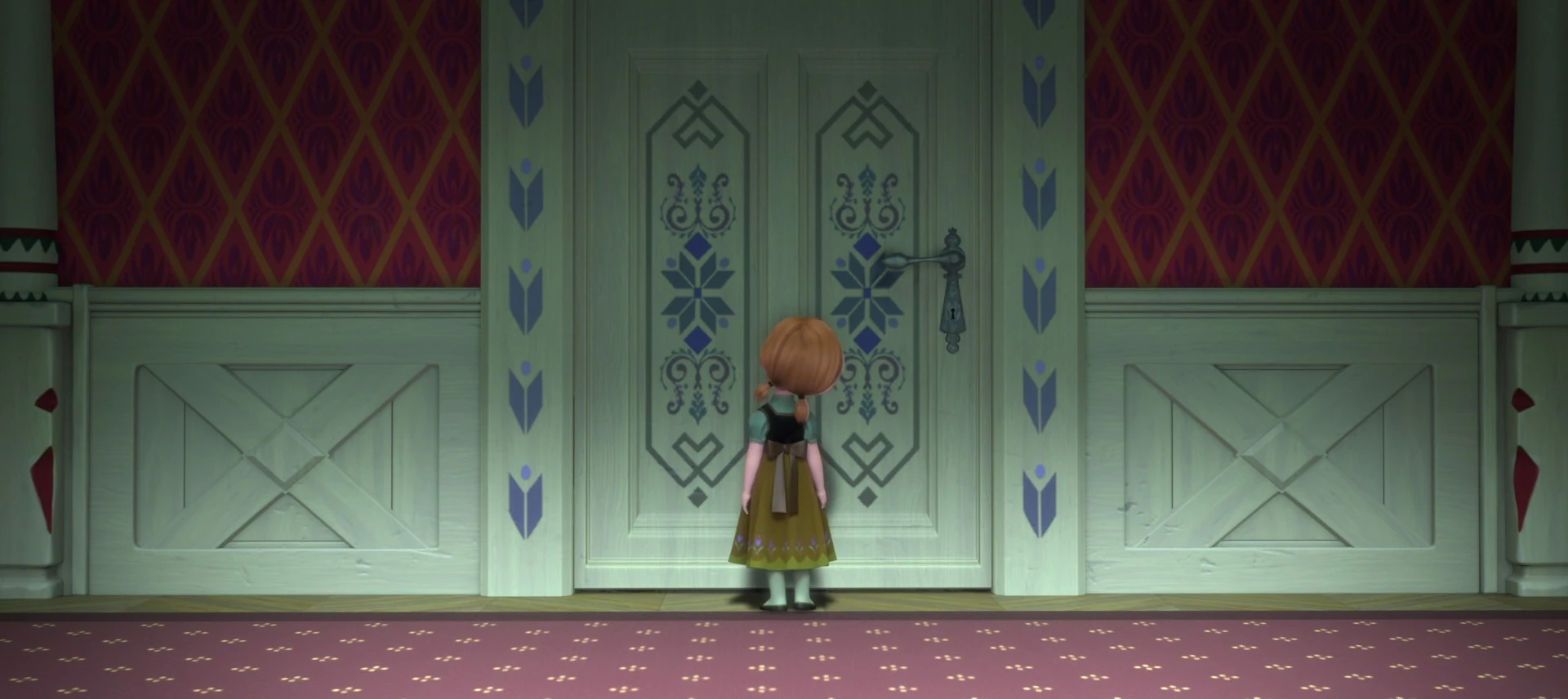
This type of ending reminds the reader of the beginning. Country songs love to do this when it comes to sad songs, and in musicals, this is the refrain's job. I personally would have loved it if Frozen had done a refrain of the "I Want to Build a Snowman" song just after Anna sacrificed herself for Elsa. It would have added some nostalgia for their childhood, thus saying she wishes she could undo all those years. Someone put one together on YouTube and it would have worked beautifully in the movie. But oh well.

The Tieback

This is that moment in a story where you remember the seemingly insignificant tidbit the author threw in back in Chapter 4, and suddenly that tidbit is the key to the solution to whatever problem is plaguing the main character. For example, in Harry Potter where you realize that all along, the fact that Harry's eyes looking like his mother's actually means something.

This happens pretty often, especially in mysteries. The key to writing this sort of ending is having the key thrown in nonchalantly enough that your reader doesn't think much of it, but it needs to be memorable enough for them to remember it and get excited when things click for your main character.

The Time Frame

This is when a story ends because the time is up. This type of ending is classically used in coming-of-age stories, using a school year to shape the beginning and end of the book. Another example would be "Tuck Everlasting," which ends when the summer does (unless you count the jump to the future, when the family sees the grave, but that's more of an epilogue).

Since that particular competition, trial or school year had a definite conclusion in sight, that helps to give a time element throughout, increasing tension. Your characters are constantly facing the end. A Time Frame also provides easy closure. Hopefully you've thrown in other plot lines that are ending in other ways, all around that same time.

Not one of my favorites,
but definitely interesting.
The Space Frame

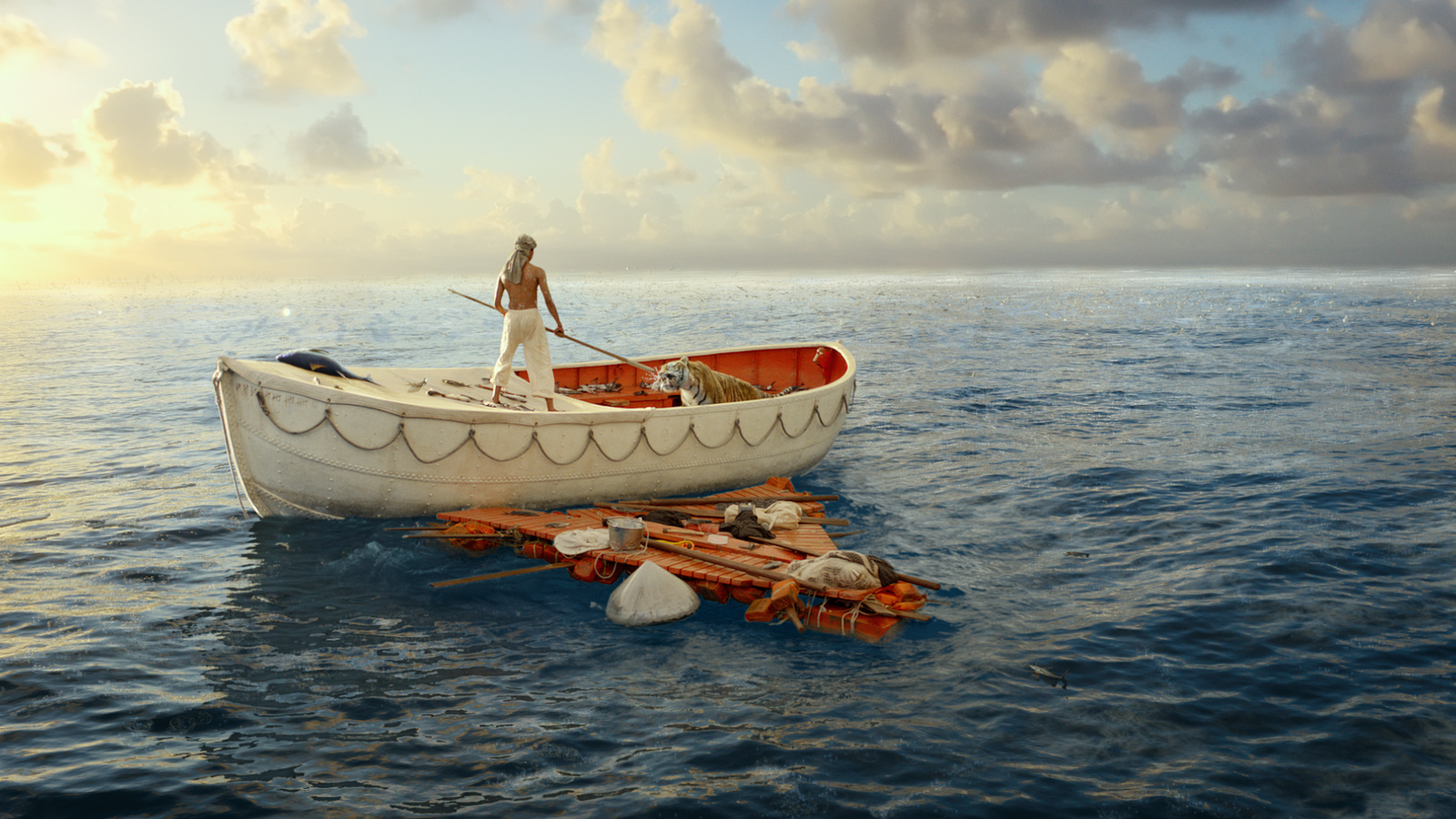
This is like the Time Frame, but instead of finishing something in time, it's when the characters reach the destination. Examples would include "Land Before Time," Life of Pi, and The Odyssey, though that last one does go on a bit longer. Still, his reaching the destination signals the end of his journey.

The Payoff

This is a satisfying ending--a reward, the revelation of a secret, or the solution to a mystery. Sherlock Holmes stories are completely built around this sort of ending. One doesn't read them to find out whether or not he can crack the case; one reads Sherlock Holmes to figure out how, and his debriefing at the end is the payoff.

Surprise and delight your reader if you are going for this type of ending. It's not as good of a read if it's not what you want or you could see it from chapters away, obviously.

The Epilogue

The purpose of an epilogue is to satisfy reader curiosity or set things up for the next book. I'm sure you're totally familiar with what these are, so I'm going to just move on.

Problem and Solution
After all, cats
are clean creatures.

This is self-explanatory. The character was faced with a problem -- How am I ever going to get this house clean before Mom comes home?! -- and the solution signals the end of the book -- Oh, look, a cat did all the cleaning just in time.

Most stories end this way in some form or another, since a conflict is built around a problem and it is resolved with a solution.

The Apt Quote

Essays, speeches and blog posts will end this way relatively often. As for stories, perhaps this translates into finishing off the story with dialogue:
"An' they chased him 'n' never could catch him 'cause they didn't know what he looked like, an' Atticus, when they finally saw him, why he hadn't done any o those things ... Atticus, he was real nice. ..."
"Most people are, Scout, when you finally see them."
He turned out the light and went into Jem's room. He would be there all night, and he would be there when Jem waked up in the morning. (To Kill a Mockingbird, by Harper Lee, final lines)
This is what people use when they want to end with people thinking profound thoughts. I'm sure it can be used, and is used, to also finish with a laugh.

Look to the Future

This is when the author gives a hint of what may happen or when the author points toward the logical consequence of what just happened. It's like when a chick flick ends with a kiss. And almost every chick flick ends with a kiss. Whether you take that to mean they started dating or they got married is your own business.

Mobilize the Reader

This is a call to action, often seen, again, in essays, speeches or opinion articles (Op-eds). Can you do it in a story, too? Yes, especially a nonfiction one. Fiction doesn't tend to have a transparent agenda that makes a call to action an option. However, I did read one fiction book, The Poisonwood Bible, which tried this type of ending.

I hated it (and wrote a post to that effect). The book was great until she threw in her call to action.

The end of my Writing Tools posts. There's a whole lot more in the book, so if you felt like my notes were doing you good, maybe you should pick up a copy. (Name that type of ending!)