Saturday, August 29, 2015

Reading Author Experiment

Experiment: Read an author for 15 minutes, then write for a few minutes. Repeat process with five different authors. Purpose: To illustrate how one's reading affects one's own writing style.

Charles Dickens

The hole in the ground was rather square. This would have been normal had a tractor or a gravedigger had digged it, but that couldn’t have been the case because it was wallowing in the middle of the interstate, and no respectful gravedigger ever digs there and no tractor would have braved the traffic, much less if there were no cones or other construction equipment to bolster it up.

Granted, it was a small hole, replacing, in effect, one of the white dashes that divided the lanes. I had been sent to investigate by the police, and so had set up my own road cones and sat down to get a look at it. By the tape measure, it was fifteen feet deep, and a flashlight showed its sides to be straight, as well as I could see as I peered in. And, of course, the first few inches were pavement and the rest dirt. Or rocks, but had someone sawed through rocks to do it?

Some might have suspected alien activity, but unless aliens were setting up a giant tripod, and we found similar holes elsewhere, I wouldn’t put any stock in it.

I have always been of the mind that if aliens were to come to Earth, the first thing they would do would be to take photographs. I’m sure it’s what Lewis and Clark would have done, had they been able.

The next thing to do was to take a sampling of the sides, see if whatever had dug or punched the hole had left behind any evidence of its makeup. Eggs made in a cast-iron pan will have small slivers of the iron scraped up into them; the same concept generally applies in situations like these. I think.

I’ve never really been sure, actually, but they pay me to pretend I am and so I do and no one is the wiser for it. After all, there’s no one who can truly be a professional in matters of holes.

Douglas Adams

The main thing you have to know about holes is they are relative. They are really just depressions, of the extremely vertical sort, in a level surface. If looked at from above with very good eyes, they wouldn’t seem to be there at all, so really, holes are of no consequence.

I don’t make it a habit of telling my customers that, because if they realized that holes are really just a psychological problem, I’d be out of a job. And then I wouldn’t be able to make rent or go out dancing at the Eagles lodge or anything good like that. I’d have to go make a hole in a mountainside so I could live in it, and that sounds like a sure way to insanity.

The trick is to get the bottom of the hole to be flush with the surrounding ground again—the bigger hole, if you will. Most level grounds, exempting plateaus and their ilk, are really just holes, if we consider that the highest ground is where “level” is and everything ought to be equal in height. But then, maybe the holes are correct and the bottom is where it all should be and holes are setting the world back to rights?

Every job has existential questions. An actor might think about whether a character is truly alive in another plane of existence, a philosopher might wonder whether God is really so smart as He says He is (we are taking it solely on His authority, after all), a child care worker might consider where a child has got off to this time. I simply ask about whether holes are the correct way of life and I am destroying the world around me by consistently plugging them up.

I plugged this one up with cow manure, mainly because it was the closest thing at hand and because it would fill the space better than grass clippings from the patch of ground that runs between the two directions of freeway.

The last bit, of course, was covered with tar, and just like that I apologized to the Earth for destroying its attempts at correctness by feeding it fertilizer.

Mary Robison

I have filled holes with all sorts of things. Bubble wrap, water from a fire hydrant (firefighters forgive me), cardboard, whatever is handy at the time. So long as the top couple inches is the same material as the stuff around it, and I didn’t make a second hole plugging the first, I’m home free.

Home is on 22nd Street, near the Sunrise Inn. Means I have a steady flow of neighbors. Nice, sometimes. Other times, I wonder if any of them is going to break into my house and steal something from me. I don’t know what, I’ve only got an outdated television and an impressive VHS collection that’s pretty much useless now that the player has worn itself out. Unlike a DVD, you can hand-rewind a VHS. Also unlike a DVD, you can’t play it forward by hand.

I keep the collection just in case. Maybe it will be my retirement fund until I fill the last hole with my dead body and they say I lived like I died and whatever else people say about people at funerals.

I stepped through my front door and prop my umbrella up on the doorframe, leaving it open a bit so it can dry out. No one wants to open up a moldy umbrella. Mildewy? Whatever.

Dinner is Pasta-Roni with meat sauce, except the meat isn’t there because I’m vegan and besides that, who would want to eat meat from inside a container? Back when I ate a steak a day, I bought it from a butcher nearby. That was before the doctor said I had to be vegan for my health.

Yes, I live alone. It means I don’t have to share a bathroom.

Harper Lee

The house once belonged to my grandmother. I moved in to live with her and when she passed on, I stayed put. By then I was building up a respectable reputation as a holer, and I knew if I moved somewhere else, I would have to start all over again. People take your business seriously when they respect you and you’ve saved their cattle from enough broken legs.

Being a holer is about more than filling a hole; it’s about figuring out what made it in the first place and making it so the hole won’t reappear (setting aside the wishes of Mother Earth, who I could almost call my business partner). Accordingly, I pulled out the Ziploc bag of soil I had pulled from the side of the hole in various spots and dumped it out on the table that once was a dining room table but now serves as my lab. The microscope is set into the table so I can slide the sediment across the table under it for viewing and then out again without bothering to lift it onto a platform like with a normal microscope.

I focused the lens so I could view the dirt and spent a good amount of time staring and sifting and staring. I knew well what it was—copper—but that didn’t give me much of an answer and so I continued staring in hopes that I could figure it out. Was a pipe shoved in and removed? That seemed the likely explanation, from the hole’s perspective, but from a road perspective, no one had seen a giant copper tube sticking straight up out of the interstate. I am sure it would have made the news and I wouldn’t have been asked to do the job.

I’d have to go look at that hole tomorrow for more clues. All I had so far was copper, and that’s too common to be of much use.

Juliet Marillier

The biggest hole I was ever challenged with was a mile long and two feet wide. It was as if the ground had developed a tear, and the tear was dangerously close to the perimeter of a hospital. This hole was not bizarre in any particular way, though, as there had been an earthquake the week before and the ground everywhere had given way to small chasms. I didn’t say it was the most impressive, but it was the biggest.

As for the most impressive: There was a hole in a nearby beach. Let me tell you, that was a conundrum. How to fill a hole that was softened by the water around it, which constantly fought to widen the hole? I had to wait for low tide to get to it, then work fast in dim conditions to plug it – with seaweed.


Next week, I will analyze the results.

Thursday, August 20, 2015

Annotations

One of the best things to happen to me in high school was the English assignment to annotate the books we read. Annotate, as in take notes about the book in the book. At first, my notes weren't super intelligent. No, they were not stupid, they just weren't particularly insightful.

Example, from the first chapter of Ray Bradbury's Fahrenheit 451: "Later, going to sleep, he would feel the fiery smile still gripped by his face muscles, in the dark. It never went away, that smile, it never ever went away, as long as he remembered." Next to this, I wrote "forced to be happy? Loving life a ton?" in the margin. Fairly obvious observation and question, younger Elizabeth. Not helpful for much of anything.

Current me thought about the word "ever," and how juvenile it sounds, by the way. Giving the author the benefit of purpose, we see he wants us to see the narrator as young and naive.

But even though they were obvious, those early annotations were helpful -- they were practice. They taught me how to read. And that taught me how to write.

Most of the insights you read on this blog are courtesy of that skill. I began with simple annotations like the one above, marking questions, things I liked, insights into symbols and imagery, and progressed to over-annotating. That wasn't strictly useful except as practice, either.

Do me a favor and rewind memory lane to this post. Look at the pictures I posted; that is what I mean by over-annotating. While this was for a college course, it was a skill I learned toward the end of high school. It is less useful, academically, than it may look, because it is hard to find much of anything. Close reading, interpreting a passage, doing a character analysis, sure. But doing a whole book like this (I didn't go that far, thankfully) would make you lose everything. Plus, when you go back to reread, you won't want to read all those notes, too.

Over-annotating taught me to edit. My husband once looked at a query letter I was editing for someone and was amazed at how much I had written in comments. It may have been longer than the letter itself -- and all I did was annotate. Over-annotating taught me to look at individual words and phrases. It focused on the language itself, while my early attempts focused on story and character.

My current style of annotating incorporates both. I take notes on the side for the general things and write in the book itself for the specifics. I am more interested in how things work than on character or plot analysis -- notice I looked at why Bradbury used "ever" instead of commenting on the subject of the sentence, the smile. I also noticed that the muscles were gripping it -- concrete words with a connotation of force, perhaps even fear. But one value of the first style of annotations is it captures the impressions of a first read. Writers need that info from editors.

If you want to be an editor, learn to annotate. Buy books and read them with pen in hand. Or skip books -- read magazines, newspaper articles, blog posts, speeches, anything you can get your hands on, and annotate it. How could it possibly be improved? Read and reread the same stuff over and over until you have an idea. Then get your hands on more stuff to read and annotate.

The same thing goes for writers. If you want to write, learn to annotate. Buy books (or anything with words) and read them with a pen in hand. It doesn't matter if you read the notes later -- it is about the process of actively thinking about what you read, of learning how to write from an author while they write.

This is note-taking for the sake of note-taking. Think you can handle that? I promise practice will beget mad skills.

Saturday, August 8, 2015

KC

I am working on a new short story I hope to submit to the Death Rattle Writers Festival, held annually where I live. The word limit is 5,000, I believe, so I decided to split my story into five sections, each with about 1,000 words.

First section: Introduction to concept and conflict, main characters

Second section: Introduce supporting character, add background and depth to conflict

Third section: Escalation of concept and conflict

Fourth section: Climax

Fifth section: Denouement (like a conclusion, but stories don't really "conclude." It's the closure scene)

Hopefully it works out! For now, here's what I have so far (Don't worry, I'll have people edit it for me):

Had Geoff slammed through the front door five seconds earlier, he would have seen KC, photograph-still, straddling the doorway between kitchen and living room and holding her lungs, half-inflated, just in front of her sternum.

But he didn’t. And when she heard the secondhand Subaru park in the carport, the sound jumpstarted KC into a panic. She ran into the kitchen, skidding around for a hiding place, somewhere to stash her lungs; and without much time to spare, she flung open a cupboard, pulled out the jars of flour and sugar and oats and rice and stuffed her lungs into the almost-too-small space, shutting the cupboard door just as her husband slammed into the entryway.

She pushed the jars against the wall and kept her back to the doorway so the pieces of her body that connected self to lungs didn’t show. At least the veins and arteries weren’t dripping.

“KC?”

“Kitchen!”

Perhaps she should look busy. She started washing her hands.

It was hard to breathe, and her breaths were longer without being deeper, the distance from lung to body resulting in a feeling of lightheadedness. She would have sat down if only she could move without Geoff noticing. Best to reveal one tragedy at a time.

The silver lining: Being attached to the cupboards made the less irregular of the two seem far less dire.

He was in the kitchen now, too, and gave her a thoughtless kiss before turning to grab a soda from the fridge.

“Geoff?”

“Yeah?”

“I got fired today.”

The oven timer beeped, shrill tones replacing the sound of her own heartbeat in her ears, though she could see her veins pulsing on the countertop. Forcing herself, KC turned her head to look back at her husband.

He was staring at the refrigerator door, the muscles in his jaw working and his grip on the soda can tight.

KC turned away again, focusing instead on her attempts to breathe, hands flat on the counter to keep them from trembling.

“Great.”

The timer beeped again, and Geoff shoved the soda into her hands and jerked the oven door open, tearing the towel off the bar on the door to protect his hands as he pulled out the tuna casserole. The entire range shook when he put the 9x13 down on it, and it shook even more when he threw the door closed and jabbed the timer button off.

Saturday, August 1, 2015

Heroes: Taking It to a Personal Level

I was doing my hair sometime this week, listening to music, when I had a small epiphany. Small because I've halfway had it before, I just hadn't thought it through.

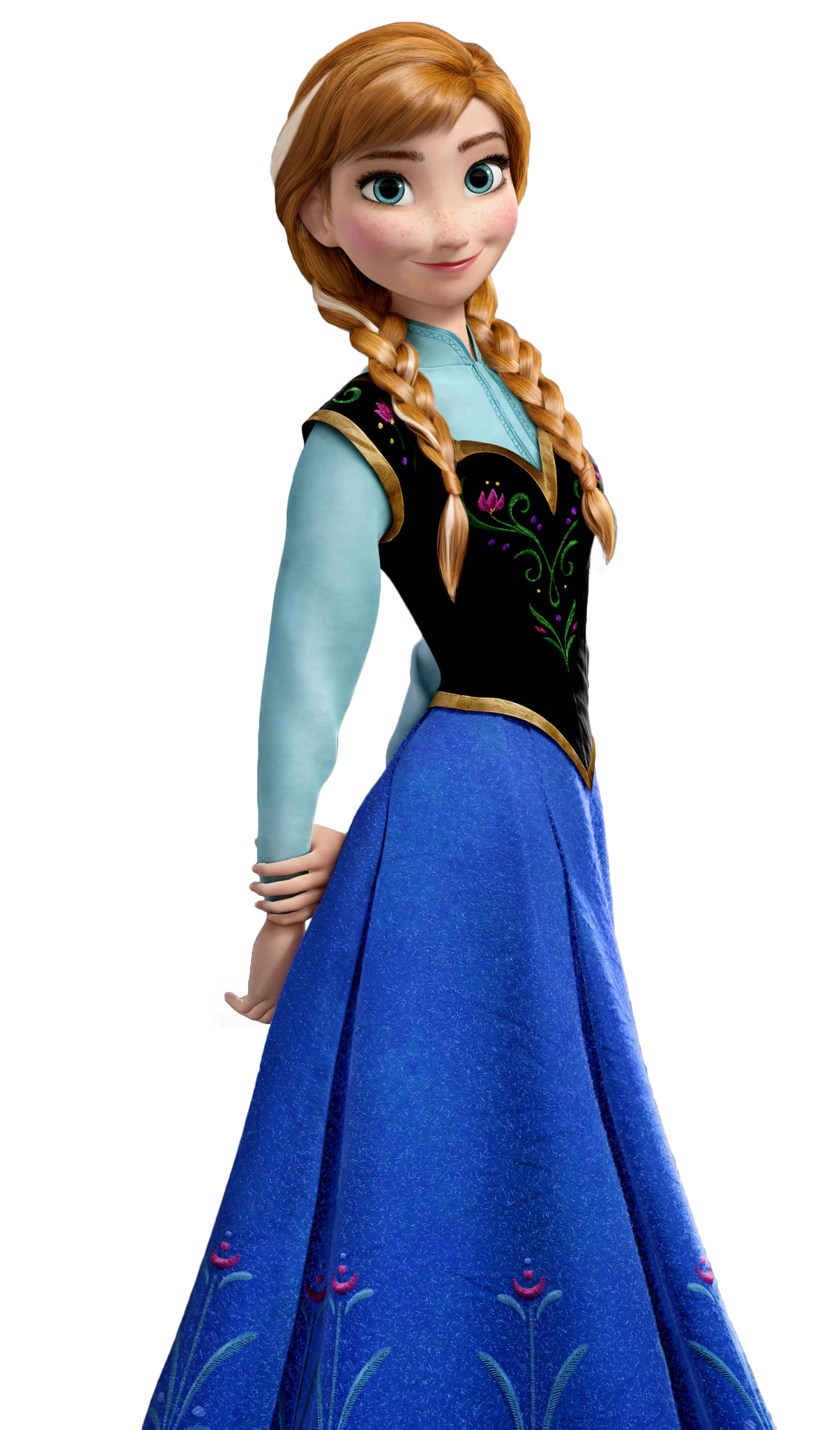
The song I was listening to was "Do You Want to Build a Snowman" from Frozen (Disney songs were the order of the day). That song is my favorite from the film, and I remembered while listening to it how Anna was best friends with her older sister, but then her older sister as good as abandoned her, avoiding her for years.

She could have taken that as betrayal. She could have become mean and self-centered, but instead she continued to reach out to her sister. Anna even went so far as to give her life for this sister, someone who many people would have advised she give up on.

Listening to the song made me realize Anna is a hero of mine. I admire how she loves despite how hurt she feels.

I asked my husband who his fictional hero is, and he said it was probably William Thatcher from A Knight's Tale. The reason: Even though life has been unfair to him, he didn't give up his dreams and did everything in his power to achieve them.

By then I had a theory, which I'll tell you about in a minute. Here are three other heroes, from my brother and two friends of mine, respectfully:

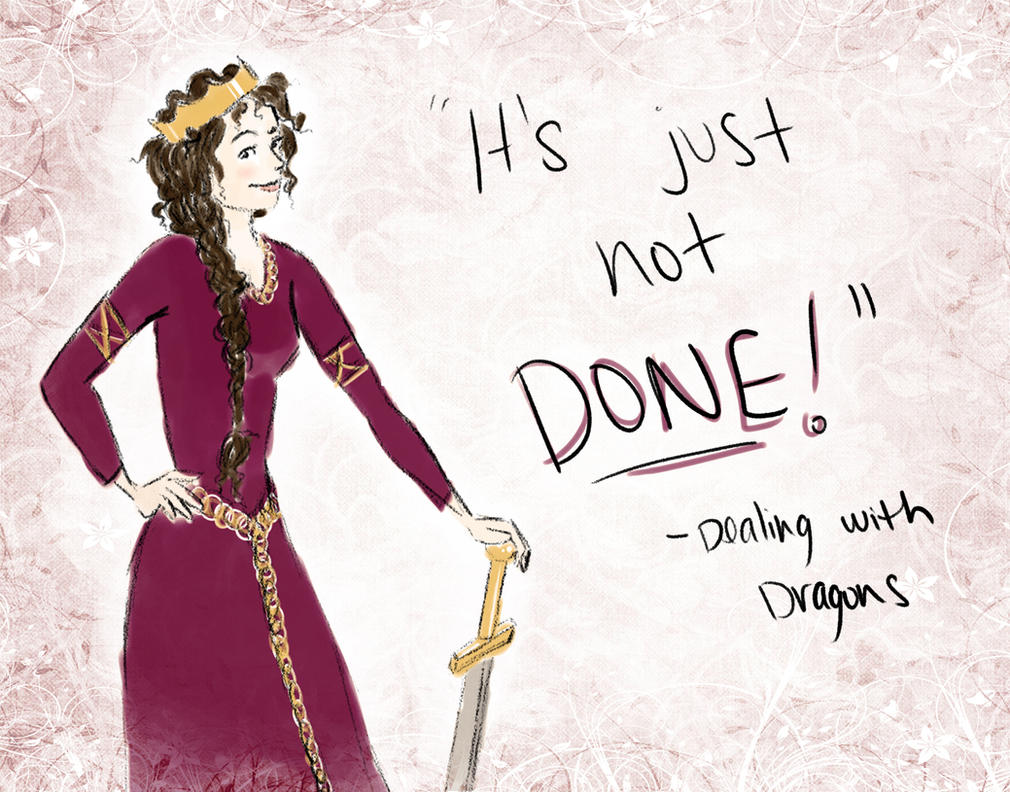
~ Cimorene from Dealing With Dragons, because "she doesn't care about following the norms and does what she wants. She's able to defeat the wizards and live with dragons and avoid unwanted princes. She's just really independent and a problem solver."

~ Eowyn from Lord of the Rings and Ellie Sattler from Jurassic Park. "Why is because they are feminist bad a**es."

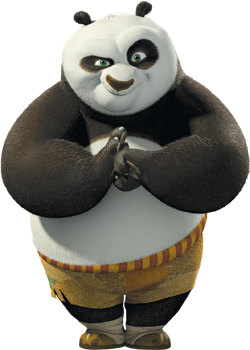
~ Po from Kung Fu Panda, because even though he feels awkward and unable, he dreams big, stays optimistic as best he can and fights to believe in himself.

Notice any trends? Here is one I see.

As everyone knows, we root for the underdog. I think we cheer even louder, though, if it isn't just any underdog and we can relate. Let's go backward with this:

~ The friend of mine who said Po struggles with bipolar disorder and an addiction to pain medication, courtesy of years spent playing sports. She has worked hard to overcome that addiction and the deep depression she falls into sometimes, and she continues to fight and stay positive.

~ The friend who loves the feminist characters is, obviously, a feminist. She will fight for what she believes in, no matter what, and has had to fight her share of battles to protect those she loves and those she thinks need more respect.

~ My brother is quiet around our family, though not so much around his friends, from what I've gathered. He's a teenager, so you can guess that while our parents are trying to push him a bit, he's also pushing back. Perhaps it is most telling to say that this brother loves Frozen and the Let It Go song.

~ My husband has great dreams of earning a Ph.D. in physics, but he always feels like the world is against him. Lack of money, dyslexia and a few other things land him squarely in the "I need to change my stars" camp.

~ As for me, I had a bit of an abusive relationship with my sister while we were growing up. We still argue if we spend too much time together, but I have put a lot of conscious effort into loving her. She could see it from the other perspective, too; there were a number of times growing up when I would play in our closet and not let her in.

My theory is that our heroes are our heroes because we so closely identify with them. We see their struggles as a form of the struggles we are going or have gone through.

How to apply that to writing? When you are constructing your heroes, give them human struggles. They aren't just fighting a dragon; they are fighting a dragon and trying to overcome personal trials, as well. There should always be a fight below the surface as well as one above.

Ask around your friends and family for their heroes and let me know if I'm right. Then figure out who your heroes are and, if you want a splash of authenticity in your writing, place your own struggles and those of people you love inside of it. Feed your muse your doubts, fears, trials, and other meat from the dragons you have had to fight. Your story will be alive because of it.

Saturday, July 25, 2015

What's Elizabeth Reading? ...Paul Raymond

One of the joys of my job is I get paid to read and do what I've been doing on this blog all along--review. As I said earlier, though, I get put in a tough situation when the book is not one I would normally recommend. No one would be happy with me if I lambasted a local writer's work, especially since I'm not a well-known and respected reviewer (yet). So I have to get creative.

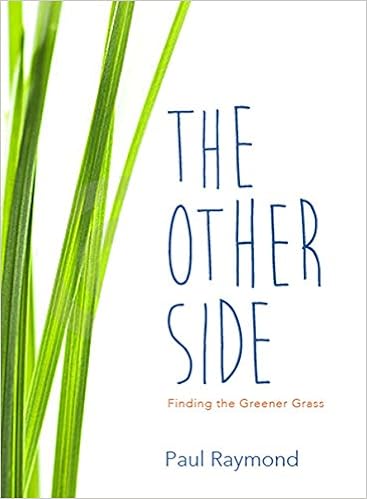
How to put a positive spin on things without being dishonest? The last time I was faced with this issue, I ended up writing an article about what went into the book, neglecting to review the content at all. This time, I decided to do a Q&A, since the book, Paul Raymond's The Other Side: Finding the Greener Grass, was essentially a memoir with a fictional spin. The author is the main character, and the realizations he has are real, but the events are contrived to make his point blatant (I don't think that worked out well for him, but oh well, I wasn't his editor).

I thought a Q&A would go well, but then I discovered the author is a politician. I knew that before, of course, since he's on the city council, but I hadn't figured on having to machete my way through non-answers in an effort to get him to answer the question I'd asked. He kept wanting to reiterate the same points: This book is fiction, and don't judge people. That was it. I was looking for something more philosophical, since it was a reflection of sorts on his life and on judgment/stereotypes/assumptions. In essence, he wanted to talk about the book and I wanted to talk about the ideas in the book. It reminded me of an episode in Psych, where someone tells Shawn Spencer to give the answer to the question he wished people had asked instead of the one they actually posed. Annoying. It made me feel sorry for our legislative reporter. Thankfully, when I gave him a chance to look over his answers, he did a bit of good machete-work himself.

Before I let you read the Q&A, I'll say that no, I don't necessarily recommend this book unless you want to the message "Don't judge based on stereotypes" bashed into your head over and over. It is written clearly, though without much style, and will get that memo across well.

And now for portions of the Q&A, beginning with part of the introduction I gave it in the article, which can be found in full here:

The protagonist and narrator of Paul Raymond’s “The Other Side: Finding the Greener Grass,” published this summer by Nampa-based Point Rider Publishing, has an unflattering view of farmers and others he sees as not being “professional.” But when he gets laid off and takes a U-Haul truck on the road to a new town and a new start, he meets people along the way who change his attitude.

Editor’s note: The questions and answers below have been edited for clarity and brevity.

Q: Why didn’t you write “The Other Side” as a memoir?

A:
When I started writing, my emotions came out. It was kind of caustic initially. I had to go back and ramp it back so I could let somebody read it. It was therapeutic for me. After that, I sat on it for years and never did do anything with it until a publisher contacted me and made me think, “Well, maybe I should do something with it.” I thought it was just personal for me, even though, as I said, most of it is fiction. Like Hank, at the store — the store was real and farmers came to the store, but that whole conversation, all that was fiction. I utilized fiction to better express my point.

Q: Why did you choose to use yourself as the main character?

A:
Well, I didn’t necessarily mean for me to be the main character, but that’s the only way I could express it. I have not written a book before, so this is new and it came over a long process. It went from venting to becoming a book.

Q: What went into the decision to make it a road trip story?

A:
I literally moved from one town to another, and I did get laid o•. Many of my thoughts (reminiscing) along the way are real, but most of the experiences on the journey were not. My thoughts are there, my feelings are there, but it was largely ÿction. I just used that trip as kind of a base line.

Q: Has anyone subject to stereotype in this book read it?

A: 
Yes, Dan, in the last chapter. I have just met him within the last 10 years, and I let him read it. He’s since passed away. But I wasn’t done with it at the time. I hadn’t added that chapter he was involved with. He thought it was really good. I have at least one farmer who is going to read it, but I haven’t had anybody — well, no, that’s not true. When I first wrote it I gave it to some people. It was offensive to them because I was so caustic. I was just letting loose.

Q: I hope you haven’t lost any friends over it?

A:
 Not that I know of.

Q: Were your parents any different from the other farmers you grew up around?

A:
Well, I perceived my dad to be pretty sharp. A lot of people came to have him help with things. My mom and dad were both educated. I didn’t ever put them in that stereotyped position. I kind of separated them out somehow.

Q: In your opinion, what is the connection between self-confidence and a judgmental attitude?

A:
I’m in my late 20s on that trip, and I kind of put myself back in that time. I was more realistically self-conscious than I am now. My self-confidence wasn’t quite as strong, and I think living on a farm kind of added to that. I pictured the people in the city to be really sophisticated, more affluent, and, comparatively, farmers didn’t seem to know what was going on. I didn’t want to be branded with them, but I was.

Q: Do you think you carried that “branding” with you through your life?

A:
Absolutely. But I eventually got over it and realized that I was OK and they were OK. I kind of lived that book and wrote it; it’s actually kind of the process I went through in real life. Only, most of those events didn’t occur. It took a long time. I think those feelings about farmers and others went away when I got done writing the first hundred pages or so. I didn’t have the intensity that I started writing with because I was relaxed. I was able to talk to and associate with anybody, any culture; I haven’t had a problem with it since. It was a life-changing experience.

“The Other Side” is available online.

Wednesday, July 15, 2015

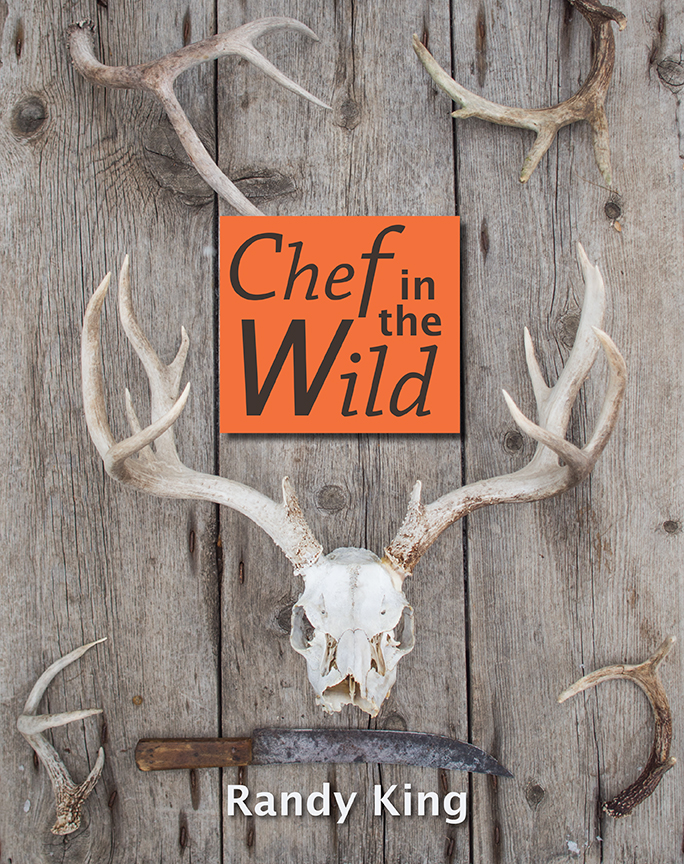
What's Elizabeth Reading? ...Randy King

This week, I reviewed a cookbook. Yeah, it was a first.

Randy King lives in my area, and he put together a cookbook called "Chef in the Wild." I already wrote a review for the Idaho Press-Tribune, which you can find here, so I'm not going to re-review it. Suffice it to say he goes through how to hunt, butcher, and cook a variety of animals.

Now for a couple thoughts.

First off: I don't think the quality of writing in a cookbook matters. I mean, the point is not to create great prose, to engage both your intellect and your imagination. The point is to tell you how to cook something. The end. Does this book do that well? I'd say it does, though I haven't cooked anything from it. I don't have wild meat on hand.

But I was never confused, and hunting tips and butchering instructions were given in prose format, before the recipe. There are pictures throughout the book, not for instructional purposes so much as to break up the mass of words. Perhaps they could have included pictures meant to illustrate butchering instructions. That would be my only request to better this book.

My other thought is that food blogging may have changed the format of a cookbook. In older cookbooks, you have the recipes and that is it. But if you go online, recipes are usually introduced with a personal anecdote and/or a walk-through of the recipe, giving detailed instructions and tips for how to do what the recipe requires.

The comments section below allows other cooks to weigh in on the recipe, giving alternative instructions to improve it, so the recipe-searcher can look through those and the original recipe to decide how to make the dish best. It has given light to the subjectivity of cooking. I once saw someone who said a brownie recipe was terrible because it was too soft and cake-like. They wanted brownies that were hard and chewy. I happen to think this person's mother didn't know how to make good brownies, but hey, it told me something valuable about the recipe: It made soft brownies.

While I have yet to see a published cookbook with a comments section, where other chefs weigh in on the recipe, "Chef in the Wild" did imitate a food blog in the story-before-recipe way. It wasn't just recipe after recipe. I consider this an improvement; I do so much better, personally, with recipes that have additional instructions in prose. They are the next-best thing to having the cook in the kitchen with me.

Basically, I highly approve of this evolution in cookbook-dom. I also highly recommend this cookbook to any hunters out there.

Friday, July 3, 2015

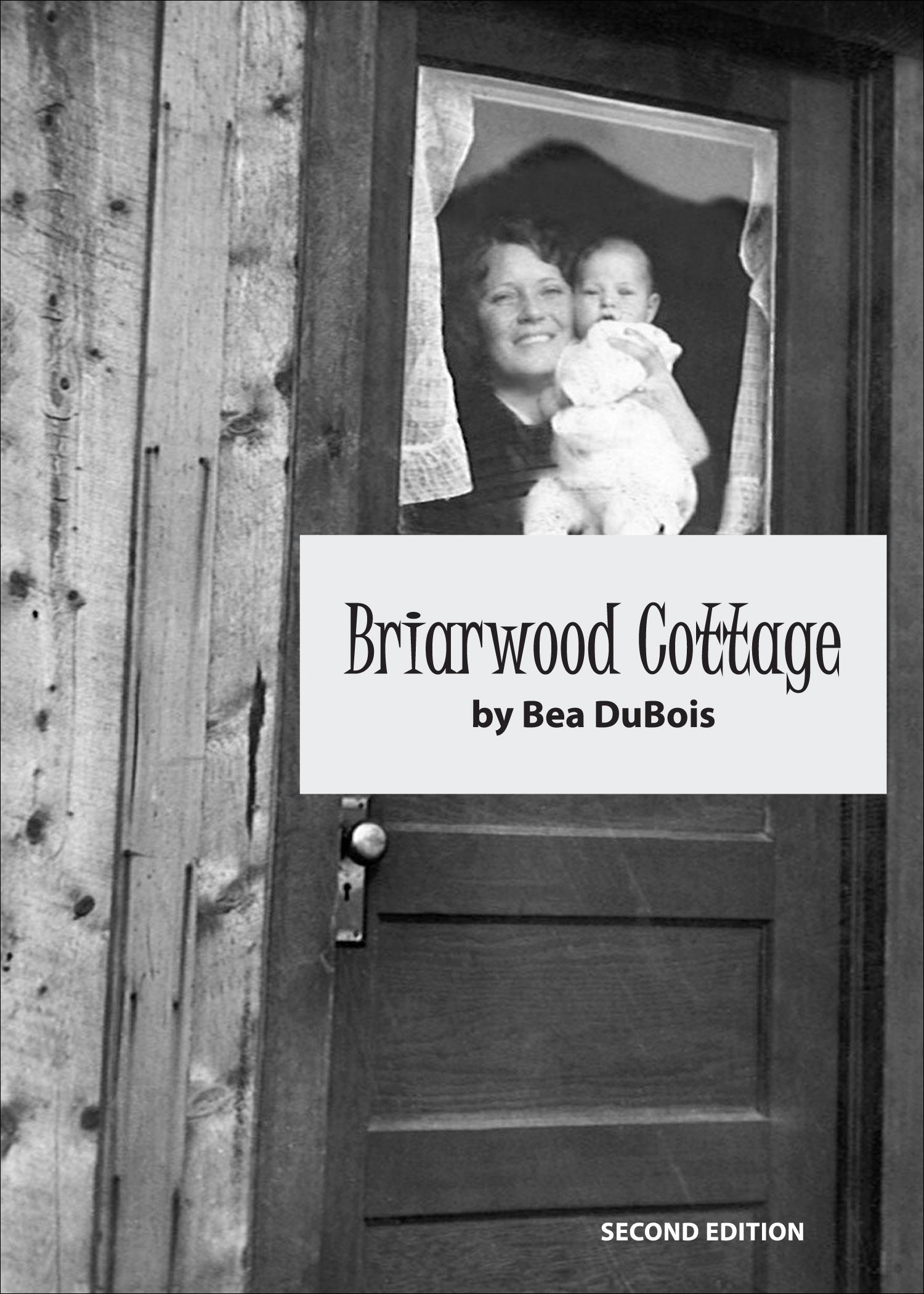
What's Elizabeth Reading? ...Bea Dubois

I was put in a tough position this week. A woman who lives in my area had written and published a book, Briarwood Cottage, and she wanted me to read and write about it in the paper. I cheerily said to send it on over.

The problem: The book isn't any good. The story is mildly interesting but has no arc, climax, or progression, and there are passages of lecture - straight lecture from teachers in the book - that does nothing for the plot or story at all. She must have done the research and wanted to use it somehow.

The characters did not make up for the deplorable story. As I said, they did not progress, and while she gave them small conflicts, each was easily resolved or forgotten. They were likeable enough, but incomplete. They weren't annoyingly 2D, if that's anything. Not deep, but there was some roundness.

As for the writing, not good. I mean, the message got across, but I got no pleasure from reading it. Simple, like if a high schooler had written the story. And this woman is no high schooler. She was writing it as a mother with young kids.

This, people, is what happens if you write a story without learning how. Not everyone can write a good story; it takes conscientious reading and writing. Please work hard so you can write something you can be proud of.

The tough position came when I needed to write something for the paper. I couldn't recommend the book. So I called the author to see if I could possibly recommend it for its one redeeming factor: It sparked intellectual interest in the Church of the Nazarene. The characters were part of that church and since one is a revival preacher, it factored in greatly. While reading, I was surprised by what these people believe and I wanted to know more. Why believe those things? How much of this was accurate, or was I misunderstanding? So I found myself doing light research into the church.

I had pinpointed the one redeeming aspect to be that it could bring interest to the church, assuming that was the author's ultimate goal.

It wasn't.

Turns out she doesn't even belong to that church, though she is Christian. Her real goal, to write a story of God helping people recover, was hinted at in the story but did not go anywhere. It was more about the characters than God.

Fail. I can't possibly recommend this book. What to write?

I ended up writing this, which was about the writing of the book and about the book, not at all a review. Safe ground. I didn't want to insult her in the newspaper - I am trying to make people want to talk to me, not push them away by being mean. The article ran in our A&E (Arts and Entertainment) section. And then I moved on to reading a cookbook someone in my area wrote. More on the cookbook later! Never reviewed one of those, have I?