Tuesday, October 22, 2013

Reasons Why the Things I Do Matter

You'll have to excuse me while I go all religious on you for a moment ... (also, warning, but this post might be a bit of a downer. Then again, it might be uplifting. Who knows.)

This weekend, I read the book of Ecclesiastes (after Proverbs in the Bible). For me, it was definitely a page-turner; I wanted to find out what happened next. That's because I was so interested in finding the answer to what I see as the main question of the book: Why does it all matter? What's the point?

When depression hits, it can carry a feeling of hopelessness along with it. We ask ourselves what the point is, and it feels like nothing we do is actually worth the effort. I was so excited to find an entire book in the Bible that is dedicated to that struggle, and I wanted to share what I learned from reading it. It probably won't help in the depths of depression (logic doesn't have a home there), but I hope it will help you resist that feeling of intense discouragement, even if it is only a little.

If you choose to read the book yourself, the first thing you should know is that in the book of Ecclesiastes (meaning "The Preacher"), "vanity" is a word that means "transitory, empty, fleeting, unsubstantial, meaningless" — i.e., pointless. Also, "under the sun," is the writer's pretty way of saying, "in this life, before we die."

I found five reasons why, according to the writer, the things I do actually matter:

Reason #1: I do my work so I can enjoy it and the blessings/fruits that come from it.

Everyone dies, so why bother working or being productive at all? 3:22 says, "Wherefore I perceive that there is nothing better, than that a man should rejoice in his own works; for that is his portion ..." The Little Red Hen strikes again! I have the right and privilege to work and enjoy what comes of it. There is a point to what I do because I can see the consequences, and they are worth it.

Reason #2: If I work hard, I can give to others.

I came naked into this world, and I'm going out with that same number of material possessions. Why bother working my butt off to get money that doesn't help me squat after I'm dead? ... Something tells me ancient Egyptians did not have to deal with this problem while they were alive. 5:12-13 says, "The sleep of a labouring man is sweet, whether he eat little or much: but the abundance of the rich will not suffer him to sleep. There is a sore evil which I have seen under the sun, namely, riches kept for the owners thereof to their hurt." Let's face it: Life is better when I am working. It gives me something productive to do. As for the fruits of my labor, they are meant not only for me, but for those around me. By working hard at life, I have a chance to be a benefit to the people around me.

Reason #3: My trials will allow me to empathize with and help others.

I work hard, but money still runs out. I give to others, but I can't solve their problems. It looks like there is no end to the sadness, and nothing I do will have a lasting effect. 7:3 says, "Sorrow is better than laughter: for by the sadness of the countenance the heart is made better." Verse 19 goes on to say, "Wisdom strengtheneth the wise more than ten mighty men which are in the city." No, it isn't better to be sad than to be happy. But when I think about the people I know who are wise, who are the most helpful to me emotionally, physically, mentally, and spiritually, they are the people who have faced a lot of hard times, and those hard times are what make them the wise and loving people they are. They can empathize with others because of what they have been through. I love the image of one wise person being better for those around them than ten people who appear to be strong, but really aren't in strong in the things that matter. If I go through tough times victoriously, I will be able to help others come out victorious, too.

Reason #4: God has a purpose for everything, even if I can't see it.

It sometimes seems like nothing I do or anyone else does matters in the grand scheme of things. The world doesn't actually get better and my existence is meaningless, no matter how hard I try. 8:16-17 says, "When I applied mine heart to know wisdom, and to see the business that is done upon the earth: ... Then I beheld all the work of God ..." There's only one person I know who knows the future, and that is God. He has things under control, and there is a purpose to everything He does or allows to happen. It may hurt, and I may not see clearly the end goal, but there is one. I'm not currently angry about any trial I have had to undergo in the past; during the trial itself, I may have been, but hindsight is 20/20. If God had sat down with me before each trial and outlined what would happen, when it would end, and how I would grow and learn, I know I would have given every one of those trials my stamp of approval. This way takes more faith, but that faith is a source of hope when I exercise it.

Reason #5: I need to take care of my loved ones. Relationships make life livable.

People are going to forget me after I die. 10:18 says, "By much slothfulness the building decayeth; and through idleness of the hands the house droppeth through." I have people who love me and who depend on me, and by continuing to try, I can help them. The only things that will continue on after me are my loved ones. They will continue to live and go through both hard times and good times, and they will go on to help others just as I have helped them. One thing I can leave behind are things that will improve their lives, whether that be good memories, a feeling of love, material possessions, wisdom, or anything else. The things I do matter because they affect others, always, whether the effect is good or bad. Relationships are important — 4:9-10, "Two are better than one; because they have a good reward for their labour. For if they fall, the one will lift up his fellow: but woe to him that is alone when he falleth; for he hath not another to help him up." And who knows what will happen after you die? The possibilities for good are endless. The best thing you can do is try to provide for the future happiness of those you love.

A final note from Ecclesiastes: 8:15, "Then I commended mirth, because a man hath no better thing under the sun, than to eat, and to drink, and to be merry: for that shall abide with him of his labour the days of his life, which God giveth him under the sun."  --> Life matters because of the happy moments! The things we do matter because they make us and others happy!

Friday, September 27, 2013

2013 Creative Writing/Teaching Conference at Southern Utah University

I spent a few hours yesterday and the first half of today attending the 2013 Creative Writing/Teaching Conference at Southern Utah University (where I attend college). Jane Hirschfield and Robin Hemley were the visiting writers. Jane is a poet, and I must admit that when I first read her recent book of poetry, Come, Thief, I was not in love. I could tell they were good poems; they just weren't my cup of tea. Here's what I mean, if it's possible to explain:
Jane Hirshfield

Everything Has Two Endings

Everything has two endings--
a horse, a piece of string, a phone call.

Before a life, air.
And after.

As silence is not silence, but a limit of hearing.

It just doesn't make me care. I guess that's my main problem with her poetry. I loved that last line, though: "As silence is not silence, but a limit of hearing." It's a twist on my regular way of seeing the world, and that's something I value.

After listening to her read, attending a class she taught, and interacting with her later, I find myself liking her poetry more, or at least, seeing that she is a wonderful poet. After that, it's really just a matter of taste (and I'll just go elsewhere, I suppose, for poetry that makes me want to eat the page).

In the class, she led us through an exercise for poetry writing. Before I walk you through it, let me write something that I wrote as a result:

She wraps herself in the scarf of delight,
tugs it round her hair
and down her back
in a wondrous cascade.
The wind feathers it
while she sits on the couch,
watching the rain condescend
to kiss the earth.

And here's one more:

Autumn
I look in my mailbox
and find only a black beetle.

Now that you've admired how poetic I can be ;-) , I will show you what she had us do that led to them. You should give it a try. First, I wrote ten ordinary nouns in a column (without thinking too hard).
house
panther
orange juice
scarf
boy
school
bell
tower
shower
fingernail
Next, in a column beside that one, I wrote ten abstract nouns (no thought given to correspondance).
argument
thirst
cold
delight
wonder
history
stereotype
giggle
scene
comedy
The next step was to write "of" between my first and second columns. Thus:
house of argument
panther of thirst
orange juice of cold(ness)
scarf of delight
boy of wonder
school of history
bell of stereotype
tower of giggle(s)
shower of scene
fingernail of comedy
Then she had us write about one of those things/combinations we had created. That's where my scarf of delight thing comes from.

Another exercise she led us through was to write a short thought or image in the sense of haiku without caring about the syllables and meter. She suggested using a season to title or begin the short poem-esque piece of writing. That's where my black beetle piece came from. That, and the one time I opened my mailbox and found nothing but a black beetle. For some reason, that particular image has stuck with me for some time, and I keep looking for an excuse to use it.

Robin HemleyRobin Hemley was there in his capacity as a writer of creative nonfiction, though he also read some poetry, and he has written novels. After the reading, I asked him why he started writing creative nonfiction, namely, memoirs. I wanted to know what made a person decide to start writing about themselves under the assumption that other people actually would be interested. It sounds a bit narcissistic (but then, I'm the one writing this blog, so who am I to talk?). He did not seem particularly narcissistic, but then, most writers need to be a little cocky in some way, otherwise they wouldn't try to get published in the first place. Anyway, I asked, because I was curious. Turns out he had already been writing fiction when someone suggested he do it, and that's where it started. Makes sense to me.

He talked with us about how memory can assist but also get in the way of writing a memoir. Memory is the worst eyewitness. Basically, it comes down to figuring out the line on your own, because writing a memoir does involve a bit of fiction. It's true! Nonfiction and fiction are like neighbors, and if nonfiction wants to have a lively household, they have to borrow decorations from the house next door. The house is still nonfiction, and the people are still nonfiction, but the decorations tie it all together.

Translation: While I may not remember what color the couches were, it might prove a useful detail. So I include a color.

I guess this means y'all should never completely trust a word I say. Actually, I make it a policy to be honest, except when I'm lying ... er, writing.

They were both delightful people, and I really enjoyed the conference. Thanks to SUU and the Utah Humanities Book Festival for putting it together.


Saturday, September 21, 2013

District of Columbia

Well folks, I'm back at school again and my internship is over. I lived and worked on Capitol Hill for about three and a half months, and I really did enjoy myself. Here are some highlights, and yes, they are out of order:

Library of Congress

Sad to say, I did not get a library card. I walked into the Jefferson building and had a strong desire to swallow it. Zeus had all the fun.


LDS Temple

While I didn't go inside, I did spend some time walking around on the grounds and inside the Visitor's Center. What I loved best about the grounds were how woods-y they were. Especially after all that city life, I was happy to be in a miniature forest ... even if it was man-made.


I was senior editor of a book!

The book is called Leonardo da Vinci Gets a Do-Over, and it's an educational fiction book for middle schoolers. It's about a trio of students who stumble across Leonardo da Vinci brought back to life with a mission to discover or invent something to benefit humankind.

I went through the book a number of times and extensively edited it. The book should be published in a couple months, I believe.


Independence Day in D.C. itself!

I went to the National Archives for a dramatic reading of the Declaration of Independence by George Washington, Thomas Jefferson, Samuel Adams, Mrs. Samuel Adams, and Benjamin Franklin. In front of the National Archives, I had a chance to sign the Declaration of Independence. How many times in a person's life does that opportunity come up?

I also visited the Lincoln Memorial and watched fireworks near the National Mall. Yay for the U.S.A.!

Memorial Day

There was an awesome parade, and I also went to the Memorial Day concert held on the lawn by the Capitol. A lot of parades these days are full of advertisements and little else, but this parade was just what one could wish for in a parade: floats, people dressed up, celebration.


Smithsonian Museums

I didn't have the chance to visit each museum, but I at least went to some. Bucket list item checked off! To the right, this is a wall of gold. Makes me wonder how much money the Smithsonian would make if they had a yard sale or auction.


The NEWSeum

I also had the chance to visit this place. It was the last tourist-y thing I did before heading back to Utah. This is a segment of the Berlin Wall.

Saturday, May 18, 2013

This World is Incredible


I have a thought to share.

I've said this before: My great-grandpa served in the German army in World War II.  He was captured by the French army early on in the war and actually did not kill a single person, as far as I know.  He spent the majority of his service in the army as a P.O.W. in France; he was released when the war ended.

I am currently living with a Jewish family.  I have known Jewish people, so they aren't a novelty, but it hit me while I was reading The Book Thief (again) that I am the great-granddaughter of a German soldier and have been extended the hospitality of a Jewish family.  It is incredible.

On Wednesday, I went to a Target store in Virginia with a group of people.  Here is a list of the people in the group:

There was a black (I think African-American) man who is working to open a small gym on Barracks Row.  He is incredibly friendly and has medical training as well as experience as a model and in personal training.

There was a Hispanic man who works for the company I am interning for.  He is a jack-of-all-trades and can do anything from installing a sink to fixing a computer.

There was an Indian-American woman who is interning at the Capitol.  She is polite, friendly, and sociable.  This is her second internship at the Capitol.

There was a Caucasian Jewish woman, the mother and wife in the home I am living in.  She is generous, hard-working, and intelligent.  Oh, and although he wasn't along for the trip, I may as well mention that her husband, who is also Jewish, was born in Great Britain.

And there was me.  I am a member of the Church of Jesus Christ of Latter-day Saints, a Mormon.  I am Caucasian, and my ancestors have been in the western United States for generations (with the exception of my German ancestors and relations).

Diversity + Unquestioned Acceptance + Friendly Conversation and Joking = That Shopping Trip.

My ancestors weren't just German.  I have ancestors who were real cowboys; my grandpa can tell stories about times when he was dropped off in the mountains with his brothers for months at a time so they could watch over the animals.  I have ancestors who were miners in the city where my family still lives; my great-grandpa on that side built a ski lift out of old mining parts, helping Park City, Utah, toward its future as a ski resort town.  I have ancestors who came west with the Mormon pioneers.

The Mormon pioneers underwent a lot of persecution.  Actually, that's the main reason they went out to Utah (at the time, it was WAY out in the boonies).  It became legal to kill a Mormon in Missouri.  Mobs attacked multiple times.  They were kicked out of towns, murdered, robbed, raped, their land and property was destroyed, you name it.  They came to Utah so they could live without fear.

I know these sorts of things happened to my ancestors, yet I don't feel discriminated against because of it.  I don't feel as if I'm being held back because of how they were treated.  I have great respect for my ancestors and my heritage, and yes, that includes my German great-grandpa.  I am not at all ashamed.  I am proud.

I have to wonder how other people feel about their own heritage and ancestry.  When I was invited to live here, this Jewish woman asked if I was Mormon, but I wasn't asked if I had German ancestry.  Would it have changed their minds?  I doubt it.  They don't seem like that sort of people.

What sort of connection do African-Americans feel toward their enslaved ancestors (assuming they descend from enslaved peoples)?  I hope they are proud.  What happened was terrible, but look at how strong those people were!  And look at how far they have come.  As an example, look at this guy I went to Target with.  He is opening a gym in Washington, D.C. Here's another: I know a black guy who is a professional photographer.  Oprah Winfrey lives the life of a celebrity and gives out tons of free stuff because she can.  The man living a few blocks away from me right now is black.  It is incredible.  I love Zora Neale Hurston's How it Feels to Be Colored Me (she was black, by the way).  Everyone should read it; it's really short (two pages or so).  Here is a quote, not the best part of the piece, but the most applicable to what I'm saying:
Someone is always at my elbow reminding me that I am the granddaughter of slaves. It fails to register depression with me. Slavery is sixty years in the past. The operation was successful and the patient is doing well, thank you. The terrible struggle that made me an American out of a potential slave said "On the line!" The Reconstruction said "Get set!" and the generation before said "Go!" I am off to a flying start and I must not halt in the stretch to look behind and weep. Slavery is the price I paid for civilization, and the choice was not with me. It is a bully adventure and worth all that I have paid through my ancestors for it. No one on earth ever had a greater chance for glory. The world to be won and nothing to be lost. It is thrilling to think--to know that for any act of mine, I shall get twice as much praise or twice as much blame. It is quite exciting to hold the center of the national stage, with the spectators not knowing whether to laugh or to weep.
How about Jewish people today?  Their oppressed ancestors and, in some cases, living relatives, lived during one of the darkest times of all human history.  Many did not live to see the end of the nightmare, and those who survived somehow continued on.  Go onto IMDb and research Jewish actors/actresses/people having to do with movies.  Harrison Ford, Dustin Hoffman, Barbra Streisand, Mel Brooks, Billy Joel, Natalie Portman, and it continues -- the list is forever long. I'm not saying these people are necessarily great (I think they're talented; however, I'm not an expert), but they are definitely people society has accepted and celebrated.  How do they feel about their Jewish heritage?

There are so many cultures out there, so many peoples who are descended from ancestors who lived in terrible circumstances.  I feel like everyone must have a story to tell from their heritage.  These stories influence us, but how?  I am a Mormon, living in the United States capital, where I once would have been unwelcome (coming East at all would have been a death-wish a century and a half ago).  I am the great-granddaughter of a WWII German soldier, living in a Jewish home by their invitation.  I feel only pride for my roots, for my ancestors, for the people whose lives have allowed me to live mine.

Tonight, I'm going to bed feeling grateful, proud, and in awe.  Oh, how society changes.


Friday, May 17, 2013

I'm in Washington, D.C. for the summer!

I have an internship this summer in Washington, D.C.  It's with Platypus Media, a small publishing company specializing in nonfiction children's books.  Can I just say how excited I am?

I got here May 14 and went straight to work.  My to-do list for this next week is an entire page in length, so it looks like this is going to be a trial-by-fire experience.  I like that.  It's like I'm an employee who is new to the company, rather than just being an intern.  I've already helped to package books in preparation for shipping, edited an article we are going to send out, and done a few other things, and that's only in two and a half days in the office.  I love that they are trusting me to actually be an asset to the company, and I hope they don't regret their decision.  Actually, I got a high-five from my boss yesterday when she discovered that I know what "stet" means.  It seems I am her first intern to ever know about "stet."  For those who don't know, "stet" is a Latin word which means "let it stand," and it's what editors write when they mean, "I said to correct this, but now I'm thinking it was fine in the first place, so just ignore the edit."

Today, I did my first tourist-y thing in D.C.  I've never been here before, and I decided that the first place I ought to visit was the Capitol.  I mean, I considered visiting the Library of Congress first, but I thought I should check the Capitol off my list from the start.  Actually being there was incredible.  I walked around for at least an hour and didn't get tired of the sight of that building.  It's just such an iconic place; I could hardly wrap my head around the fact that I visited the Capitol.  One of the greatest parts was it is totally within walking distance of the place where I'm staying.  I think the best way to be a tourist is to live there, because then you have all the time in the world to walk over to a tourist attraction after a leisurely morning.

Here are some photos I took.

This is what you see if you stand on the steps and look out.


Friday, May 10, 2013

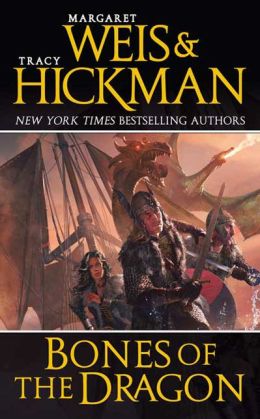
What's Elizabeth Reading? ...Weis and Hickman

I finished Bones of the Dragon a couple days ago and couldn't help thinking that something was not quite right with this book.  It's not that it was confusing, terribly written, uninteresting, or hyped up on drugs; I kept trying to figure it out, but was having trouble putting my finger on just what was wrong.

I realized what was up when I was talking with my sister about Harry Potter.  She was laughing at the memory of me bawling while reading the seventh Harry Potter book.  I remember crying worst when (spoiler alert for any hermit who hasn't read it) Fred died -- I was sitting in my bed next to a box of tissues, crying so hard I couldn't read.

And that's what is wrong with Weis and Hickman's Bones of the Dragon: I was not emotionally involved in the story.  Not many books make me cry, and I don't need them to.  It's just that a couple prominent characters died and I didn't care.  The story was wonderful, the writing was fine, and I checked the library only to discover that it doesn't have the sequel, much to my disappointment.

A good story will make me feel like if I died and saw one of the characters in Heaven, nothing would be amiss.  The characters need to be real, and the reader needs to connect with them and care about them.

Does that ruin the book?  No, but it means it isn't anything special you need to hunt down and read, no matter how far that hunting trip takes you.  As I mentioned in my last post, this book follows Celtic mythology more than most fantasy novels, and it does it well.  The world Weis and Hickman have created works, and I didn't find myself pushed out of the story because of an error in their reasoning or plot.

Next adventure for me: Washington, D.C.  I leave on Tuesday.  I'm going to pack a couple books, but I won't be living there long enough to find a library and convince them to give me a library card.  Something makes me think the Library of Congress won't let me check out books. :-p  Weis and Hickman did get me thinking about mythology, though, and how it is used in fantasy.  So what do you think -- Should I spend my summer reading myths?  If anyone has a myth recommendation, I'm open to suggestions. :-)

Saturday, May 4, 2013

What's Elizabeth Reading? ...Weis and Hickman

Summer break has just begun and with it, a novel I'm reading for fun.  On the 14th, I'm heading to Washington, D.C. for an internship with Platypus Media.  This leaves me with a little over a week to prepare, relax, and read.

My choice for my first for-fun novel this summer (I'm hoping there will be more of them) is Bones of the Dragon by Margaret Weis and Tracy Hickman.  I chose it after happily wandering around in the library and seeing that the two of them have a lot of fantasy novels out.  Seeing as I need to read more fantasy (both because it's great and because I want to be better-read in the genre; I obviously need some help if I've never read anything by them), I looked through my options and chose this book.  I am now a few chapters in and am enjoying reading it (both the book itself and the fact that I'm reading for fun -- can you tell I'm excited to be allowed to read whatever I want?!).

First thing to notice is that while most fantasy books follow the tradition of Lord of the Rings in the cultures they follow, this book adheres more to the Viking culture.  I think it's a nice change, though I'm far from being bored with the Anglo-European bit.  If you want still yet another culture for fantasy, I'd recommend you read Daughter of the Empire by Raymond E. Feist -- that series leans more toward medieval Japanese culture (I think, but then, I wasn't around in those times).

Nothing is bugging me so far, so that's a good sign.  I'm thinking I chose a good book to start the summer with.  Happy summer, everyone!