Saturday, September 26, 2015

Submitted! Death Rattle Writer's Festival

I thought I wasn't going to make my goal of submitting something to the Death Rattle Writer's Festival, but I was wrong! However, I didn't end up sending that story I posted a while back about lungs; instead, I set the following. The first half should be familiar. Crossing my fingers it will be accepted!

Jeff was that guy at the office whose chair had an odd habit of sinking now and then, seemingly at random but somehow always while he was having a conversation with someone. For the first month after he started using that particular chair, he had profusely apologized to whomever he happened to be speaking to at the time of each gravitatious incident. The following month, Jeff had had enough and snooped around the building for a replacement chair. Finding one in a spare conference room filled with marvelous, non-sinking chairs (he tested each), he made the swap and had approximately two days of seated bliss before a conversation was once again intruded upon by his chair sinking toward the ground. It appeared that his chair had been returned to his desk. Jeff spent a couple weeks swapping his chair and having it disgracefully return before he finally gave up. He stopped bothering to apologize when he sank a foot during any sort of parley, and instead would staunchly refuse to readjust the chair until the conversation had reached a clear end. If someone so much as crinkled the corner of their eye at his chair’s antics, Jeff would give them his best So? look.

His wife had suggested he prop the chair up on boxes, or perhaps a short filing cabinet or fridge. Mel always had ill-conceived ideas like that; unfortunately, what he had once considered endearing was by now, after 15 years of marriage, grating on his patience as he found himself telling her to please refrain from spray painting the front door with a skull and crossbones in honor of Halloween, to please put the dead leaves in trash bags instead of lighting them on fire in the middle of their suburban front yard, or even to please refrain from giving cookies to the Girl Scouts every time they knocked on the door, no matter how delicious they were or how fresh from the oven. In the instance particular to his office chair, Jeff explained to Mel, in the kindest way possible, that the chair’s single swivel leg would get in the way of an attempt to wedge a refrigerator down there.

“Can’t you just remove the leg?” she had asked.

“How am I supposed to slide my chair in and out from beneath my desk if it’s on a refrigerator?”

“By attaching wheels to the bottom of the refrigerator. Look, it would save you space—”

“That’s too much work, Mel.”

“Fine, have it your way. Let your chair sink. Heaven only knows what sort of impression that makes on whoever it is you talk to all day,” she said.

“The people I talk to all day already know my chair sinks,” Jeff said, massaging his eyes and the bridge of his nose. He didn’t bother asking what people would think if they came into his small office to find him sitting on a filing cabinet or refrigerator, never mind the fact that the nearest outlet for the refrigerator was across the room—the one near his desk was already taken up with computer plugs and a plug for a machine so foreign to him that he kept it more for the bland mystery of it than for its potential usefulness He would have to rearrange his entire office for that extra two feet-by-two feet space his wife was promising he would gain by the chair-base exchange.

“The people you talk to all day,” Mel was saying, “gave you the chair you have as a joke, a welcome-to-the-office hazing, and you should do them one better by economizing space. Who knows, you could get promoted for your ingenuity.”

Mel had enough ingenuity for the both of them, and that’s why Jeff rarely bothered to think anymore beyond whatever was necessary for his position as an assistant to the county clerk. Which, frankly, wasn’t much.

Jeff had settled into his life, settled for his life, and settled on continuing onward in much the same way, if he could help it. Whatever craving he had for excitement was met on at least a weekly basis by Mel.

On a week when Mel had figured it was a good idea to embroider a detailed, silver map of the United States onto their American flag in preparation for the patriotic summer holidays, Jeff decided to walk to work, promising Mel he would pick up some muffins on his way home. It was a promise he fully intended to keep, for although he was perpetually short on patience with his wife, he did love her and didn’t want her to have to go even one Sunday morning without her customary blueberry muffin with streusel on top.

It was raining that day, but since Jeff had never owned an umbrella, and since he had already decided upon walking, there was little he could do about it. He tossed his neighbor’s newspaper on top of his head to protect his hair from the rain, but then remembered how the ink tended to smear and thought better of it, stopping at the corner of the block to deliver the paper to the small beagle the family who lived there had recently adopted. The pup wagged his tail in overdone gratitude and began tearing the paper to pieces so that it would resemble the one already eroding on the front steps of the house.

There were few people out that morning, and of those who were, only Jeff seemed to not have an umbrella in working condition. He walked beneath every tree he saw in an effort to make up for it, but there simply weren’t enough full trees along the way to protect his now-sopping clothes from the rain. So Jeff was soon forced to give up any effort to avoid the drizzle and instead focused on avoiding the deepest of the puddles. It was hard to tell if his socks were wet because of his shoes or his dripping pant legs.

He opened the door to the county office thinking about how he hadn’t realized it was so far from his home, then crossed the stone floor of the lobby toward the elevators.

His elevator-mate was an aging black fellow wearing a fedora, and he stood beside some luggage and an umbrella. The umbrella, which was lying on top of the man's luggage, was blue and opened slightly to air out.

They exchanged good mornings and stared together at the elevator doors.

And then they fell.

This wasn't the usual slow, stomach-churning sinking into the basement; no, this was something that dropped Jeff to his knees in a puddle on the floor and nearly impaled him with the black man's umbrella, something that made him wonder that his last thoughts on this earth were going to be a four-letter word his mother would throttle him for once he was close enough to the pearly gates for her arms to bridge the distance.

But then, maybe such words are the last thoughts through many people's minds.

It certainly wasn't the last thought through the black man's mind. His thoughts weren't coherent enough to be notable at all without his morning coffee to give them a leg up.

They slammed against the bottom of the elevator shaft, and Jeff was jarred onto his belly in the darkness. Through the pain and dark, his thoughts centered on Mel and what his last words to her would be—something heroic, he hoped, or else something novel. Something that would help her world continue to revolve now that he wouldn’t be in it.

He dragged his hands into his coat pockets, fumbled out a pen and, energy failing, penned her a note on the surface closest to where his hand happened to fall.

He heard the other man move, may God bless his soul and Jeff’s, and then gave up on living.

But perhaps he gave up too soon.

When Jeff woke up, someone was slapping him. Death isn’t in the business of slapping people to make sure they have truly died, he was pretty sure, and so he blinked his way through the pulsing bass in his head and saw the ceiling panel lights of the county office basement.

“Hey buddy. What’d you do, drop one story and figure your number was up?” The slapper gave half a smile of amusement. His eyes looked a little concerned, though, as those darn fingers starting poking everywhere on his body, causing pain to strike up wherever they passed.

“Stop,” he begged. “Pain.”

“Staff of life, sir, staff of life. Hey,” he said, tugging a little on Jeff’s tie and flipping it over. “What’s this?”

Jeff moved his eyes over to look and saw that his pen had failed to give off much ink when he was writing his last words.

All that was written was “chai,” in bad penmanship.

“Shopping list,” he said. He was becoming sensible enough to be embarrassed. “Other guy?”

“Oh, this is his floor. He’s fetching some paperwork or something.”

More embarrassed.

“Yeah, don’t worry about him. He’s been in falling elevators before. Takes them in stride.”

“He what?”

“Doesn’t matter. Can I have permission to use your phone to call someone to come get you?”

“Yeah.”

“This your wife?” The slapper flashed him a picture of Mel.

Jeff tried to nod, but it didn’t really work, and he just blinked instead. Then he fell asleep.

He woke up again in the car, his face smashed up against the passenger side window and the seat belt halfway up his stomach from his slouched position. He groaned.

Mel was the one driving. “I asked for muffins, not chai tea, Jeff,” she said, her words clipped and tart. “Blueberry muffins.”

Then she glanced over at him and sighed, handing him his tie. “But here, I finished up the list for you.”

The back of his tie now read "chai, blueberry muffins, OJ, baklava, Cheerios."

Saturday, September 19, 2015

What's Elizabeth Reading? ...John J. O'Hagan

Let me be clear about something: No one at my work asked me to review books. I do it because I love to read and any excuse to spend time reading while at work is a good one. My only criteria for which books I read is it must have a local author.

That said, I wasn't super excited about reading John O'Hagan's When the Basques Ruled California. It's a history book, and as much as I have always wanted to enjoy history, I have never really been able to get into it. I wanted teachers to share stories, but they always shared events connected with names, places, and dates. I wanted to learn about past cultures, but they always shared technological advances and cultural shifts. I wanted the details, they gave the big picture.

But O'Hagan gave me what I always wanted from a history book. I got to learn about the woman who stormed out of mass because she was the object lesson of the day, and really her husband had cheated on her and none of it was her fault. I got to learn about the Franciscan priest who just wanted to be transferred away from the frontier but dutifully followed orders anyway. I got to read about the native who killed his wife so he could have relations with another woman without getting in trouble for adultery. I even read about that man's judicial proceedings, but not in so much depth as to be boring.

I actually wondered whether O'Hagan was being ethical; was he making personalities up? Was he taking artistic license to fill in the blanks? When I asked him about it during our interview for the paper, he told me he was able to go into that much detail because the Spanish and Basques of the time were obsessed with record keeping. He had all the info and wasn't making anything up.

The other reason for all the detail, though, is O'Hagan thinks history is about people, not events, dates, or places. Basically, he is the teacher I wish I had had. The book was easy to understand, interesting to read (especially if you already cared about the topic), and detailed enough to help you form a full picture of what was going on - both the big picture and the small one.

You can read my Idaho Press-Tribune review here. I came at it from an angle of describing the process that goes into writing and publishing a history book, just for interest's sake. For those curious about that process, or the publishing process in general, I recommend giving it a read.

Friday, September 11, 2015

Analysis of Reading Author Experiment

Charles Dickens
Douglas Adams
I let you down by not analyzing my author experiment last week. I forgot and wanted to talk about the picture book. I will analyze now instead.

First. Who knew Douglas Adams and Charles Dickens were such similar writers?! I picked those two because I figured they were so different from each other the difference in my writing would be stark. While it modernized itself a bit, I couldn't help but notice the similar sense of humor while doing the two different readings. Dickens loves to be literal and honest, to point out the silliness inherent in humans, and to present jokes with a straight face. Adams is blunt, uses silliness to great effect, and acts as if his constant joking were totally serious. The only real differences are genre and time period. I swear these two would have been friends.
Mary Robison

What it means is from what I can tell, my writing modernized between the first and second segments, but the sense of humor - they had reminded me how funny silliness with a straight face can be - remained largely the same.

Things changed more when I added Mary Robison. The book of hers I was reading from, One D.O.A. One on the Way, is minimalist to an extreme. That was reflected in my shorter sentences. Also courtesy of Robison was my turn from being silly to being cynical.

Was this on purpose? I honestly am not sure. Human error is a large factor in this experiment that could only be done away with if I hadn't known my hypothesis and purpose. Basically, if I had done this on accident or asked an unknowing person to act as test subject, it would have worked better.

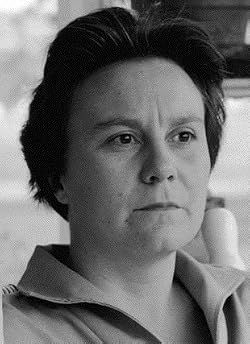
Harper Lee
I do not think it was completely on purpose, though I was definitely aware it was happening. I think what happens, subconsciously, is that when reading a talented author's work, I admire it and notice the aspects I particularly enjoy. I remember how fun the silliness is, how gritty and true minimalism can sound, and I want to bring it into my writing. It also puts me into a mood that fits that author's tone.

This experiment was tiring. Writing can be tiring when it isn't flowing right (power through anyway!), but this was draining in its own right. I was getting breaks, so the writing shouldn't have gotten me down, but the constant switching from style to style wore me out. That is why the Juliet Marillier section is so short. My story wasn't pushing itself forward and I was continually disorienting myself.

Juliet Marillier
I read it to my husband, and he said it didn't sound like me. It was terse and flippant, were his exact words, which is something I am going to blame on Mary Robison. It took a while to get her tone out of my system, and by the end, it still wasn't quite gone. I think it is because her style is so domineering, whereas the styles of Harper Lee and Juliet Marillier are softer, more mellow. Maybe I needed more time reading from them to soak up their respective tones and phraseology, whereas Mary Robison's prose comes in swinging.

I had never thought about people's writing styles being strong like a personality can be strong, but I suppose it is true. There's a lesson I wasn't looking for.

Have any added observations? Let me know. I'm interested.

Saturday, September 5, 2015

What's Elizabeth Reading? ...Mercy McCulloch Hasselblad

I originally wrote this review for the Idaho Press-Tribune, but who am I kidding? I knew I'd be putting it here, too.

I think this is the first time I have reviewed a children's picture book. To me, the writing in those books does not matter much beyond its clarity and brevity. A lot needs to be said with as little as possible. I have not read the book to a child yet, but I think it would fit the bill for a 5- to 6-year-old. Too much text for younger. As for the pictures, which are arguably more important than the text, hers were a bit dark but are probably fine. Again, I need to read it to a child to be sure.

Here's what was printed in the paper, with a couple words added here and there.

A beloved analogy in the Bible is found in Isaiah 64: “Yet you, Lord, are our Father. We are the clay, you are the potter; we are all the work of your hand.”

When I think of this analogy, I think about how stressed out I can get sometimes and how those hard times have helped sculpt me into the person I am today.

Mercy McCulloch Hasselblad, of Nampa, looks at it a bit differently. For her, it wasn’t about the pain, but about the confusion.

“Everybody always said I should be a nurse because I can handle blood and guts and everything and I patch people up,” she told me when I paid her a visit. “But I wasn’t sure, because I really like doing art and writing, and I wasn’t sure what I should do. And I was praying a lot and just trying to figure it out (during college). … If God made me adept at certain things, should I do those, or should I do other things?”

The conundrum: Mercy wanted to serve God. By being a nurse, she could do mission work; by becoming an artist, what could she do that would mean as much?

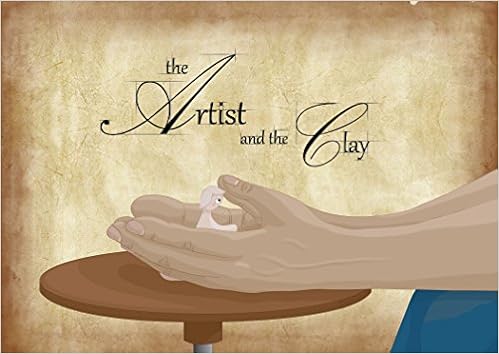
Mercy, I’d like to suggest that you have served God admirably with your book “The Artist and the Clay.” There is more than one way to serve, and you have found one that suits you well.

This children’s book was printed in India while Mercy and her husband were there doing work with their charity, Covenant Media.

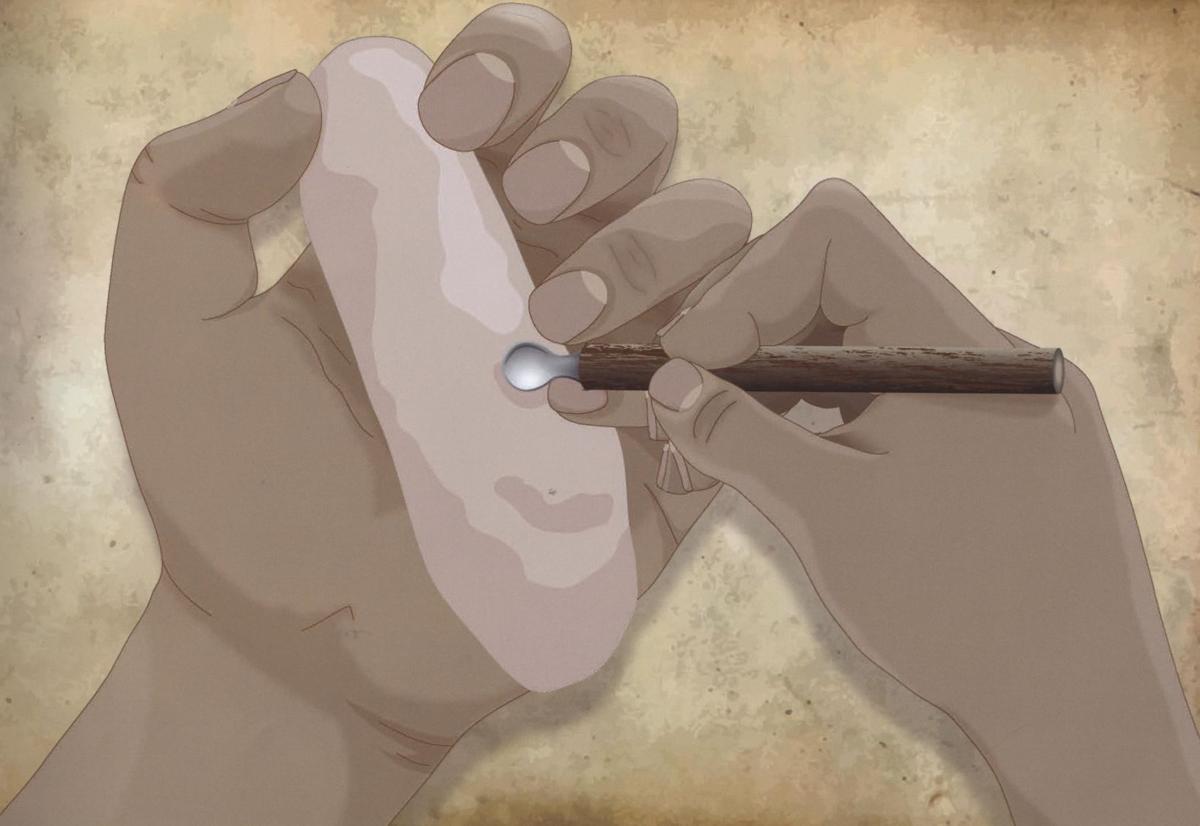
The book tells the story of a clay figurine who wants to be beautiful like the stained glass window in the Artist’s house. The Artist has other plans, though, and by the end, the clay figurine is something special, indeed.

The text is simple and carries a memorable lesson: You are made the way you are for a purpose. It’s a message our world could hear a little more often, in my opinion. Think of how many more people would reach their potential if only they thought it was a possibility and of worth.

I haven’t taken an art class since the sixth grade, but Mercy took me on as a student during our interview so she could show me the program she uses for her art, Adobe Illustrator. We made an evergreen tree … that looked a whole lot better after she worked her magic on it. Wish I had the tree to show you, but I don't. Sorry.

Mercy has been working with the program since she was 15 years old (so of course her trees look better than mine, but who’s justifying themselves?). Familiarity didn’t necessarily speed up the process much, though; she told me one scene took her 10 hours to make. Thankfully, with the computer program, she can re-use images. Repeated images in the book include ivy leaves, books and wood patterns, among other images. See if you can scout them out when you get a copy.

Mercy said all these illustrations started as scribbles of kindergarten caliber. That gives her a basic image to work off of, and she improves it from there. Luckily, she can try and try again on the same picture without running into physical problems like a stray pen marking.

If you want to get your hands on a copy of the book, she’s selling it on Amazon.com.

I just realized she never signed my copy. Dang it.

Saturday, August 29, 2015

Reading Author Experiment

Experiment: Read an author for 15 minutes, then write for a few minutes. Repeat process with five different authors. Purpose: To illustrate how one's reading affects one's own writing style.

Charles Dickens

The hole in the ground was rather square. This would have been normal had a tractor or a gravedigger had digged it, but that couldn’t have been the case because it was wallowing in the middle of the interstate, and no respectful gravedigger ever digs there and no tractor would have braved the traffic, much less if there were no cones or other construction equipment to bolster it up.

Granted, it was a small hole, replacing, in effect, one of the white dashes that divided the lanes. I had been sent to investigate by the police, and so had set up my own road cones and sat down to get a look at it. By the tape measure, it was fifteen feet deep, and a flashlight showed its sides to be straight, as well as I could see as I peered in. And, of course, the first few inches were pavement and the rest dirt. Or rocks, but had someone sawed through rocks to do it?

Some might have suspected alien activity, but unless aliens were setting up a giant tripod, and we found similar holes elsewhere, I wouldn’t put any stock in it.

I have always been of the mind that if aliens were to come to Earth, the first thing they would do would be to take photographs. I’m sure it’s what Lewis and Clark would have done, had they been able.

The next thing to do was to take a sampling of the sides, see if whatever had dug or punched the hole had left behind any evidence of its makeup. Eggs made in a cast-iron pan will have small slivers of the iron scraped up into them; the same concept generally applies in situations like these. I think.

I’ve never really been sure, actually, but they pay me to pretend I am and so I do and no one is the wiser for it. After all, there’s no one who can truly be a professional in matters of holes.

Douglas Adams

The main thing you have to know about holes is they are relative. They are really just depressions, of the extremely vertical sort, in a level surface. If looked at from above with very good eyes, they wouldn’t seem to be there at all, so really, holes are of no consequence.

I don’t make it a habit of telling my customers that, because if they realized that holes are really just a psychological problem, I’d be out of a job. And then I wouldn’t be able to make rent or go out dancing at the Eagles lodge or anything good like that. I’d have to go make a hole in a mountainside so I could live in it, and that sounds like a sure way to insanity.

The trick is to get the bottom of the hole to be flush with the surrounding ground again—the bigger hole, if you will. Most level grounds, exempting plateaus and their ilk, are really just holes, if we consider that the highest ground is where “level” is and everything ought to be equal in height. But then, maybe the holes are correct and the bottom is where it all should be and holes are setting the world back to rights?

Every job has existential questions. An actor might think about whether a character is truly alive in another plane of existence, a philosopher might wonder whether God is really so smart as He says He is (we are taking it solely on His authority, after all), a child care worker might consider where a child has got off to this time. I simply ask about whether holes are the correct way of life and I am destroying the world around me by consistently plugging them up.

I plugged this one up with cow manure, mainly because it was the closest thing at hand and because it would fill the space better than grass clippings from the patch of ground that runs between the two directions of freeway.

The last bit, of course, was covered with tar, and just like that I apologized to the Earth for destroying its attempts at correctness by feeding it fertilizer.

Mary Robison

I have filled holes with all sorts of things. Bubble wrap, water from a fire hydrant (firefighters forgive me), cardboard, whatever is handy at the time. So long as the top couple inches is the same material as the stuff around it, and I didn’t make a second hole plugging the first, I’m home free.

Home is on 22nd Street, near the Sunrise Inn. Means I have a steady flow of neighbors. Nice, sometimes. Other times, I wonder if any of them is going to break into my house and steal something from me. I don’t know what, I’ve only got an outdated television and an impressive VHS collection that’s pretty much useless now that the player has worn itself out. Unlike a DVD, you can hand-rewind a VHS. Also unlike a DVD, you can’t play it forward by hand.

I keep the collection just in case. Maybe it will be my retirement fund until I fill the last hole with my dead body and they say I lived like I died and whatever else people say about people at funerals.

I stepped through my front door and prop my umbrella up on the doorframe, leaving it open a bit so it can dry out. No one wants to open up a moldy umbrella. Mildewy? Whatever.

Dinner is Pasta-Roni with meat sauce, except the meat isn’t there because I’m vegan and besides that, who would want to eat meat from inside a container? Back when I ate a steak a day, I bought it from a butcher nearby. That was before the doctor said I had to be vegan for my health.

Yes, I live alone. It means I don’t have to share a bathroom.

Harper Lee

The house once belonged to my grandmother. I moved in to live with her and when she passed on, I stayed put. By then I was building up a respectable reputation as a holer, and I knew if I moved somewhere else, I would have to start all over again. People take your business seriously when they respect you and you’ve saved their cattle from enough broken legs.

Being a holer is about more than filling a hole; it’s about figuring out what made it in the first place and making it so the hole won’t reappear (setting aside the wishes of Mother Earth, who I could almost call my business partner). Accordingly, I pulled out the Ziploc bag of soil I had pulled from the side of the hole in various spots and dumped it out on the table that once was a dining room table but now serves as my lab. The microscope is set into the table so I can slide the sediment across the table under it for viewing and then out again without bothering to lift it onto a platform like with a normal microscope.

I focused the lens so I could view the dirt and spent a good amount of time staring and sifting and staring. I knew well what it was—copper—but that didn’t give me much of an answer and so I continued staring in hopes that I could figure it out. Was a pipe shoved in and removed? That seemed the likely explanation, from the hole’s perspective, but from a road perspective, no one had seen a giant copper tube sticking straight up out of the interstate. I am sure it would have made the news and I wouldn’t have been asked to do the job.

I’d have to go look at that hole tomorrow for more clues. All I had so far was copper, and that’s too common to be of much use.

Juliet Marillier

The biggest hole I was ever challenged with was a mile long and two feet wide. It was as if the ground had developed a tear, and the tear was dangerously close to the perimeter of a hospital. This hole was not bizarre in any particular way, though, as there had been an earthquake the week before and the ground everywhere had given way to small chasms. I didn’t say it was the most impressive, but it was the biggest.

As for the most impressive: There was a hole in a nearby beach. Let me tell you, that was a conundrum. How to fill a hole that was softened by the water around it, which constantly fought to widen the hole? I had to wait for low tide to get to it, then work fast in dim conditions to plug it – with seaweed.


Next week, I will analyze the results.

Thursday, August 20, 2015

Annotations

One of the best things to happen to me in high school was the English assignment to annotate the books we read. Annotate, as in take notes about the book in the book. At first, my notes weren't super intelligent. No, they were not stupid, they just weren't particularly insightful.

Example, from the first chapter of Ray Bradbury's Fahrenheit 451: "Later, going to sleep, he would feel the fiery smile still gripped by his face muscles, in the dark. It never went away, that smile, it never ever went away, as long as he remembered." Next to this, I wrote "forced to be happy? Loving life a ton?" in the margin. Fairly obvious observation and question, younger Elizabeth. Not helpful for much of anything.

Current me thought about the word "ever," and how juvenile it sounds, by the way. Giving the author the benefit of purpose, we see he wants us to see the narrator as young and naive.

But even though they were obvious, those early annotations were helpful -- they were practice. They taught me how to read. And that taught me how to write.

Most of the insights you read on this blog are courtesy of that skill. I began with simple annotations like the one above, marking questions, things I liked, insights into symbols and imagery, and progressed to over-annotating. That wasn't strictly useful except as practice, either.

Do me a favor and rewind memory lane to this post. Look at the pictures I posted; that is what I mean by over-annotating. While this was for a college course, it was a skill I learned toward the end of high school. It is less useful, academically, than it may look, because it is hard to find much of anything. Close reading, interpreting a passage, doing a character analysis, sure. But doing a whole book like this (I didn't go that far, thankfully) would make you lose everything. Plus, when you go back to reread, you won't want to read all those notes, too.

Over-annotating taught me to edit. My husband once looked at a query letter I was editing for someone and was amazed at how much I had written in comments. It may have been longer than the letter itself -- and all I did was annotate. Over-annotating taught me to look at individual words and phrases. It focused on the language itself, while my early attempts focused on story and character.

My current style of annotating incorporates both. I take notes on the side for the general things and write in the book itself for the specifics. I am more interested in how things work than on character or plot analysis -- notice I looked at why Bradbury used "ever" instead of commenting on the subject of the sentence, the smile. I also noticed that the muscles were gripping it -- concrete words with a connotation of force, perhaps even fear. But one value of the first style of annotations is it captures the impressions of a first read. Writers need that info from editors.

If you want to be an editor, learn to annotate. Buy books and read them with pen in hand. Or skip books -- read magazines, newspaper articles, blog posts, speeches, anything you can get your hands on, and annotate it. How could it possibly be improved? Read and reread the same stuff over and over until you have an idea. Then get your hands on more stuff to read and annotate.

The same thing goes for writers. If you want to write, learn to annotate. Buy books (or anything with words) and read them with a pen in hand. It doesn't matter if you read the notes later -- it is about the process of actively thinking about what you read, of learning how to write from an author while they write.

This is note-taking for the sake of note-taking. Think you can handle that? I promise practice will beget mad skills.

Saturday, August 8, 2015

KC

I am working on a new short story I hope to submit to the Death Rattle Writers Festival, held annually where I live. The word limit is 5,000, I believe, so I decided to split my story into five sections, each with about 1,000 words.

First section: Introduction to concept and conflict, main characters

Second section: Introduce supporting character, add background and depth to conflict

Third section: Escalation of concept and conflict

Fourth section: Climax

Fifth section: Denouement (like a conclusion, but stories don't really "conclude." It's the closure scene)

Hopefully it works out! For now, here's what I have so far (Don't worry, I'll have people edit it for me):

Had Geoff slammed through the front door five seconds earlier, he would have seen KC, photograph-still, straddling the doorway between kitchen and living room and holding her lungs, half-inflated, just in front of her sternum.

But he didn’t. And when she heard the secondhand Subaru park in the carport, the sound jumpstarted KC into a panic. She ran into the kitchen, skidding around for a hiding place, somewhere to stash her lungs; and without much time to spare, she flung open a cupboard, pulled out the jars of flour and sugar and oats and rice and stuffed her lungs into the almost-too-small space, shutting the cupboard door just as her husband slammed into the entryway.

She pushed the jars against the wall and kept her back to the doorway so the pieces of her body that connected self to lungs didn’t show. At least the veins and arteries weren’t dripping.

“KC?”

“Kitchen!”

Perhaps she should look busy. She started washing her hands.

It was hard to breathe, and her breaths were longer without being deeper, the distance from lung to body resulting in a feeling of lightheadedness. She would have sat down if only she could move without Geoff noticing. Best to reveal one tragedy at a time.

The silver lining: Being attached to the cupboards made the less irregular of the two seem far less dire.

He was in the kitchen now, too, and gave her a thoughtless kiss before turning to grab a soda from the fridge.

“Geoff?”

“Yeah?”

“I got fired today.”

The oven timer beeped, shrill tones replacing the sound of her own heartbeat in her ears, though she could see her veins pulsing on the countertop. Forcing herself, KC turned her head to look back at her husband.

He was staring at the refrigerator door, the muscles in his jaw working and his grip on the soda can tight.

KC turned away again, focusing instead on her attempts to breathe, hands flat on the counter to keep them from trembling.

“Great.”

The timer beeped again, and Geoff shoved the soda into her hands and jerked the oven door open, tearing the towel off the bar on the door to protect his hands as he pulled out the tuna casserole. The entire range shook when he put the 9x13 down on it, and it shook even more when he threw the door closed and jabbed the timer button off.