Saturday, May 18, 2013

This World is Incredible


I have a thought to share.

I've said this before: My great-grandpa served in the German army in World War II.  He was captured by the French army early on in the war and actually did not kill a single person, as far as I know.  He spent the majority of his service in the army as a P.O.W. in France; he was released when the war ended.

I am currently living with a Jewish family.  I have known Jewish people, so they aren't a novelty, but it hit me while I was reading The Book Thief (again) that I am the great-granddaughter of a German soldier and have been extended the hospitality of a Jewish family.  It is incredible.

On Wednesday, I went to a Target store in Virginia with a group of people.  Here is a list of the people in the group:

There was a black (I think African-American) man who is working to open a small gym on Barracks Row.  He is incredibly friendly and has medical training as well as experience as a model and in personal training.

There was a Hispanic man who works for the company I am interning for.  He is a jack-of-all-trades and can do anything from installing a sink to fixing a computer.

There was an Indian-American woman who is interning at the Capitol.  She is polite, friendly, and sociable.  This is her second internship at the Capitol.

There was a Caucasian Jewish woman, the mother and wife in the home I am living in.  She is generous, hard-working, and intelligent.  Oh, and although he wasn't along for the trip, I may as well mention that her husband, who is also Jewish, was born in Great Britain.

And there was me.  I am a member of the Church of Jesus Christ of Latter-day Saints, a Mormon.  I am Caucasian, and my ancestors have been in the western United States for generations (with the exception of my German ancestors and relations).

Diversity + Unquestioned Acceptance + Friendly Conversation and Joking = That Shopping Trip.

My ancestors weren't just German.  I have ancestors who were real cowboys; my grandpa can tell stories about times when he was dropped off in the mountains with his brothers for months at a time so they could watch over the animals.  I have ancestors who were miners in the city where my family still lives; my great-grandpa on that side built a ski lift out of old mining parts, helping Park City, Utah, toward its future as a ski resort town.  I have ancestors who came west with the Mormon pioneers.

The Mormon pioneers underwent a lot of persecution.  Actually, that's the main reason they went out to Utah (at the time, it was WAY out in the boonies).  It became legal to kill a Mormon in Missouri.  Mobs attacked multiple times.  They were kicked out of towns, murdered, robbed, raped, their land and property was destroyed, you name it.  They came to Utah so they could live without fear.

I know these sorts of things happened to my ancestors, yet I don't feel discriminated against because of it.  I don't feel as if I'm being held back because of how they were treated.  I have great respect for my ancestors and my heritage, and yes, that includes my German great-grandpa.  I am not at all ashamed.  I am proud.

I have to wonder how other people feel about their own heritage and ancestry.  When I was invited to live here, this Jewish woman asked if I was Mormon, but I wasn't asked if I had German ancestry.  Would it have changed their minds?  I doubt it.  They don't seem like that sort of people.

What sort of connection do African-Americans feel toward their enslaved ancestors (assuming they descend from enslaved peoples)?  I hope they are proud.  What happened was terrible, but look at how strong those people were!  And look at how far they have come.  As an example, look at this guy I went to Target with.  He is opening a gym in Washington, D.C. Here's another: I know a black guy who is a professional photographer.  Oprah Winfrey lives the life of a celebrity and gives out tons of free stuff because she can.  The man living a few blocks away from me right now is black.  It is incredible.  I love Zora Neale Hurston's How it Feels to Be Colored Me (she was black, by the way).  Everyone should read it; it's really short (two pages or so).  Here is a quote, not the best part of the piece, but the most applicable to what I'm saying:
Someone is always at my elbow reminding me that I am the granddaughter of slaves. It fails to register depression with me. Slavery is sixty years in the past. The operation was successful and the patient is doing well, thank you. The terrible struggle that made me an American out of a potential slave said "On the line!" The Reconstruction said "Get set!" and the generation before said "Go!" I am off to a flying start and I must not halt in the stretch to look behind and weep. Slavery is the price I paid for civilization, and the choice was not with me. It is a bully adventure and worth all that I have paid through my ancestors for it. No one on earth ever had a greater chance for glory. The world to be won and nothing to be lost. It is thrilling to think--to know that for any act of mine, I shall get twice as much praise or twice as much blame. It is quite exciting to hold the center of the national stage, with the spectators not knowing whether to laugh or to weep.
How about Jewish people today?  Their oppressed ancestors and, in some cases, living relatives, lived during one of the darkest times of all human history.  Many did not live to see the end of the nightmare, and those who survived somehow continued on.  Go onto IMDb and research Jewish actors/actresses/people having to do with movies.  Harrison Ford, Dustin Hoffman, Barbra Streisand, Mel Brooks, Billy Joel, Natalie Portman, and it continues -- the list is forever long. I'm not saying these people are necessarily great (I think they're talented; however, I'm not an expert), but they are definitely people society has accepted and celebrated.  How do they feel about their Jewish heritage?

There are so many cultures out there, so many peoples who are descended from ancestors who lived in terrible circumstances.  I feel like everyone must have a story to tell from their heritage.  These stories influence us, but how?  I am a Mormon, living in the United States capital, where I once would have been unwelcome (coming East at all would have been a death-wish a century and a half ago).  I am the great-granddaughter of a WWII German soldier, living in a Jewish home by their invitation.  I feel only pride for my roots, for my ancestors, for the people whose lives have allowed me to live mine.

Tonight, I'm going to bed feeling grateful, proud, and in awe.  Oh, how society changes.


Friday, May 17, 2013

I'm in Washington, D.C. for the summer!

I have an internship this summer in Washington, D.C.  It's with Platypus Media, a small publishing company specializing in nonfiction children's books.  Can I just say how excited I am?

I got here May 14 and went straight to work.  My to-do list for this next week is an entire page in length, so it looks like this is going to be a trial-by-fire experience.  I like that.  It's like I'm an employee who is new to the company, rather than just being an intern.  I've already helped to package books in preparation for shipping, edited an article we are going to send out, and done a few other things, and that's only in two and a half days in the office.  I love that they are trusting me to actually be an asset to the company, and I hope they don't regret their decision.  Actually, I got a high-five from my boss yesterday when she discovered that I know what "stet" means.  It seems I am her first intern to ever know about "stet."  For those who don't know, "stet" is a Latin word which means "let it stand," and it's what editors write when they mean, "I said to correct this, but now I'm thinking it was fine in the first place, so just ignore the edit."

Today, I did my first tourist-y thing in D.C.  I've never been here before, and I decided that the first place I ought to visit was the Capitol.  I mean, I considered visiting the Library of Congress first, but I thought I should check the Capitol off my list from the start.  Actually being there was incredible.  I walked around for at least an hour and didn't get tired of the sight of that building.  It's just such an iconic place; I could hardly wrap my head around the fact that I visited the Capitol.  One of the greatest parts was it is totally within walking distance of the place where I'm staying.  I think the best way to be a tourist is to live there, because then you have all the time in the world to walk over to a tourist attraction after a leisurely morning.

Here are some photos I took.

This is what you see if you stand on the steps and look out.


Friday, May 10, 2013

What's Elizabeth Reading? ...Weis and Hickman

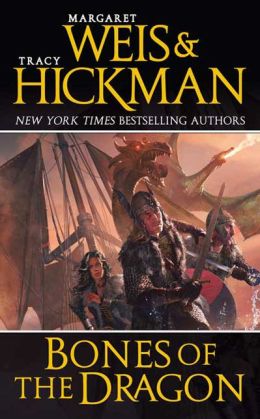
I finished Bones of the Dragon a couple days ago and couldn't help thinking that something was not quite right with this book.  It's not that it was confusing, terribly written, uninteresting, or hyped up on drugs; I kept trying to figure it out, but was having trouble putting my finger on just what was wrong.

I realized what was up when I was talking with my sister about Harry Potter.  She was laughing at the memory of me bawling while reading the seventh Harry Potter book.  I remember crying worst when (spoiler alert for any hermit who hasn't read it) Fred died -- I was sitting in my bed next to a box of tissues, crying so hard I couldn't read.

And that's what is wrong with Weis and Hickman's Bones of the Dragon: I was not emotionally involved in the story.  Not many books make me cry, and I don't need them to.  It's just that a couple prominent characters died and I didn't care.  The story was wonderful, the writing was fine, and I checked the library only to discover that it doesn't have the sequel, much to my disappointment.

A good story will make me feel like if I died and saw one of the characters in Heaven, nothing would be amiss.  The characters need to be real, and the reader needs to connect with them and care about them.

Does that ruin the book?  No, but it means it isn't anything special you need to hunt down and read, no matter how far that hunting trip takes you.  As I mentioned in my last post, this book follows Celtic mythology more than most fantasy novels, and it does it well.  The world Weis and Hickman have created works, and I didn't find myself pushed out of the story because of an error in their reasoning or plot.

Next adventure for me: Washington, D.C.  I leave on Tuesday.  I'm going to pack a couple books, but I won't be living there long enough to find a library and convince them to give me a library card.  Something makes me think the Library of Congress won't let me check out books. :-p  Weis and Hickman did get me thinking about mythology, though, and how it is used in fantasy.  So what do you think -- Should I spend my summer reading myths?  If anyone has a myth recommendation, I'm open to suggestions. :-)

Saturday, May 4, 2013

What's Elizabeth Reading? ...Weis and Hickman

Summer break has just begun and with it, a novel I'm reading for fun.  On the 14th, I'm heading to Washington, D.C. for an internship with Platypus Media.  This leaves me with a little over a week to prepare, relax, and read.

My choice for my first for-fun novel this summer (I'm hoping there will be more of them) is Bones of the Dragon by Margaret Weis and Tracy Hickman.  I chose it after happily wandering around in the library and seeing that the two of them have a lot of fantasy novels out.  Seeing as I need to read more fantasy (both because it's great and because I want to be better-read in the genre; I obviously need some help if I've never read anything by them), I looked through my options and chose this book.  I am now a few chapters in and am enjoying reading it (both the book itself and the fact that I'm reading for fun -- can you tell I'm excited to be allowed to read whatever I want?!).

First thing to notice is that while most fantasy books follow the tradition of Lord of the Rings in the cultures they follow, this book adheres more to the Viking culture.  I think it's a nice change, though I'm far from being bored with the Anglo-European bit.  If you want still yet another culture for fantasy, I'd recommend you read Daughter of the Empire by Raymond E. Feist -- that series leans more toward medieval Japanese culture (I think, but then, I wasn't around in those times).

Nothing is bugging me so far, so that's a good sign.  I'm thinking I chose a good book to start the summer with.  Happy summer, everyone!

Tuesday, April 30, 2013

Mortal Angel

It's Finals Week.

You know, I could conceivably end this post there, but I wanted to share a portion of my latest short story with you.  It still needs work, but that's one of the best things about studying creative writing: Nothing is ever finished; your professors understand that, so you turn things in anyway.  It's a great system.

The story is an inset adaptation (a story based off another story or piece of art, not fanfiction) of Billy Collins'  poem Questions About Angels and this painting by Joanna Sierko-Filipowska.  I've titled it Mortal Angel.  I hope you enjoy this scene.


When Gabrielle’s hair tickled her awake the next morning, she realized she had accidentally left the window open all night.  Some wind had made its way through the window and a couple papers were haphazardly flying about the room.  She got out of bed, closed the window, and was all the way into the shower – still numb to the world around her – before she noticed that the pain in her back was much relieved.
       At the same time, she noticed that the water falling on her was not obeying gravity in its usual fashion.  It felt almost as if something was between parts of her back and … While Gabrielle was forming this thought, she brought her hand up to her back to investigate.  Her fingers touched something solid, and it was covered with wet feathers.
Gabrielle scrambled out of the shower in a panic. She slipped on the tiled floor and grabbed the counter to save herself from falling, then straightened up to face herself in the mirror.  The reflection showed a wet young woman with suds in her hair standing stark naked with small, pigeon-gray, feathered wings sprouting from between her shoulder blades.
Each wing was about a hand span in length and three inches from top to bottom at the widest, and though they were undoubtedly growing from her body, she had no feeling in them.  If she had been able to feel them as one feels one’s fingers, she would have noticed them a lot earlier.  As it was, they were like growths on her back and to this point had only caused her pain and irritation.
       Now, however, they also caused near-hysteria.  Gabrielle had sunk to the rug on the bathroom floor, too weak to stand.  Her hands were trembling terribly and her breath was shallow and quick.  She wondered if she would pass out.  She wondered if the wings were really there.  Stretching a hand behind her, she felt the small feathers slip between her fingers as she ran them down the length of each wing.
To list all the things she wondered would be absurd for the sheer number of them.  She sat on the bathroom floor with the suds in her hair and goose bumps all over her body,  her eyes shifting quickly from item to item in the bathroom, searching for stability as she tried to get her breathing under control.  Her head was buzzing, her heart was fluttering, and she soon found herself vomiting into the toilet.
       Bracing herself against the counter, she washed out her mouth and did her best to start breathing slowly, performing a breathing exercise that had worked once before.  She closed her eyes and focused on counting and breathing, counting and breathing, counting and breathing, anything but the wings (heart palpitation), counting and breathing.
When she had herself under control again, Gabrielle stepped back into the shower, which had continued to run, and rinsed out her hair, carefully continuing to count and breathe.  Getting out of the shower, she toweled herself off, avoiding the wings (how was she supposed to dry them off?), and then got dressed in a loose T-shirt and some jeans.  Putting on a bra presented a bit of a problem, but after struggling for a moment, she was able to hook the back strap beneath the wings.  She decided that if she was to go to school that day, she would have to wear a large hoodie.  Luckily, the wings were still small enough to be hidden.
       Class was a relief, and by throwing herself into the lectures and labs, Gabrielle was able to forget the fungi on her back.  Brandon gave her a questioning look once, which reminded her of the wings and launched her into a hurried breathing exercise, but other than that, no one seemed to notice that anything was strange about her that day.
       Brandon tried to strike up a conversation with her after their last class, asking her for advice for his friend, a photography major who needed to figure out what to do for a final project.  She shrugged him off and hurried for home.
       Time away from staring at her wings had allowed her to think and come to grips with her situation, and now she wanted to do a little research.  Gabrielle locked herself inside her bedroom and took off the hoodie and shirt so she could see the wings in her full length mirror.
       They had grown since that morning, and were now twice as big as they had been before.  It was a miracle, really, that no one had noticed them.  The wings lay, docile, against her back.  She tentatively attempted to move them, to fan them out, but it was useless.  So she gently bent her arm and moved one wing with her hand.  It was as if the wings were paralyzed – Gabrielle had no feeling in the wings themselves, but her back could feel that they had been moved as she handled first one, then the other.  They felt warm.


Friday, April 19, 2013

Kolob Canyon Review


The university I attend has a literary journal called the Kolob Canyon Review.  A while back, I submitted a poem to the journal and it was accepted.  It was great for someone to accept it, because I'd also tried it at a few other literary journals and was tired of rejection letters at that point.  There's only so much you can take, you know?  Last night, there was a poetry reading for the KCR.  There was a mistake in the program so although I was scheduled to read, I wasn't listed in it.  They figured it out and I read my piece.  It seemed extraordinarily short to me, because I read this poem just after someone else had read a short story.

Some great pieces were read, and I had a good time. :-)  This poem below is the one I submitted and read.

Earl Street

Four youthful explorers
took a summer walk.
Adventure pushed them
beyond the mailboxes
at the corner of their neighborhood.
They
stopped
often
for the littlest, who tended to lag
behind,
fishing for pond scum
in the thirsty wetlands by the road.
Past the end of the pavement
they found a rusty street sign –
Earl Street and Greenfield Drive.
Abandoned by progress,
discovered again by these children,
Earl Street is two parallel trails
in the earth, carved by wheels.
The explorers quested
to the end of Earl Street,
where it is erased
by field grass.
Then they turned back
toward home.

Thursday, April 18, 2013

What's Elizabeth Reading? ...Robin McKinley

I once made the mistake of using the term "sci-fi fantasy" to describe a genre to my older brother.  He's a bigger reader than I am, if you can wrap your head around that.  I distinctly remember him telling me "Elizabeth, there's no such thing as 'sci-fi fantasy,'" and then me feeling sheepish afterward.  I don't remember what I thought this genre was, but I soon learned the difference between science fiction and fantasy.

Robin McKinley's Dragonhaven would have come in handy back when my brother told me that, because McKinley proves him wrong.  Okay, it actually fits in a genre called "science fantasy," but it is indeed a hybrid of science fiction and fantasy.

Dragonhaven is about dragons, yes, but they are approached scientifically.  Its premise is that dragons are an endangered species protected inside three national parks across the world.  That being the case, they aren't magical so much as an unusual animal the public is fascinated by.

I would not have pegged it as being written by the same author who wrote Beauty, which is great.  It means McKinley is versatile, that she isn't stuck in one voice, era, or even genre.  The writing is good in a not-good way -- it is written in first person by someone who is not a writer, so there are mistakes here and there which are common and, I'm convinced, intentional.

My one problem with the book was it dragged.  Understandably, the narrator is obsessed by certain details, but the result is a book which could be better paced.  It was interesting, and enjoyable, but I would not recommend this book to someone who is not addicted to reading.  Okay, maybe if they were addicted to dragon literature, I would.

Sometimes when authors tackle environmental themes, it feels preachy and didactic, but this book wasn't, which was a relief.  I'd like to keep the didacticism in my nonfiction reading, thanks.

So there you go.  Oh, and this may be the first book I've read for this blog so far that had me checking online to see if there was a sequel (there isn't), so I guess that means it was good, right?